The US-DRC Strategic Partnership Agreement (signed December 4, 2025) doesn't explicitly name China as excluded from Strategic Asset Reserve projects. Instead, Annex 2 defines "covered nations" by reference to 10 U.S.C. § 4872(f)(2)—a provision in U.S. National Defense Authorization Act that lists China, Russia, Iran, and North Korea as countries from which the Department of Defense is prohibited from procuring critical materials. By incorporating this statute, the SPA creates automatic, self-updating exclusion of Chinese companies from $24 trillion in Congolese mineral wealth without requiring explicit discriminatory language.
The Statutory Mechanism: 10 U.S.C. § 4872(f)(2) defines "covered foreign countries" for U.S. defense procurement restrictions. The statute was enacted to protect American military supply chains from dependence on geopolitical adversaries. By invoking this provision in the SPA's Annex 2, the definition of "covered nations" becomes self-updating—if Congress adds additional countries to 10 U.S.C. § 4872 in future legislation, those countries automatically become excluded from DRC Strategic Asset Reserve projects without renegotiating the bilateral agreement. The SPA states: "Countries may be added to or removed from this definition for purposes of this Agreement by mutual written consent of the Parties, taking into consideration national security and supply chain objectives." This means the U.S. can request additions, but the DRC cannot remove countries without Washington's approval.
The One-Third Ownership Threshold: The SPA doesn't only exclude entities organized under covered nation laws—it disqualifies any entity with one-third or more ownership by covered nation nationals, entities where covered nation nationals hold CEO positions, or entities where covered nations control one-third or more of board appointments. This threshold is strategically brutal: most joint ventures, minority stakes, and strategic partnerships exceed 33% equity participation. This means major Chinese mining operators in the DRC are structurally disqualified:China Molybdenum (CMOC) controls Tenke Fungurume Mining—one of world's largest copper-cobalt operations—excluded
Zijin Mining operates multiple DRC concessions—excluded
Huayou Cobalt, world's largest cobalt refiner with extensive DRC holdings—excluded
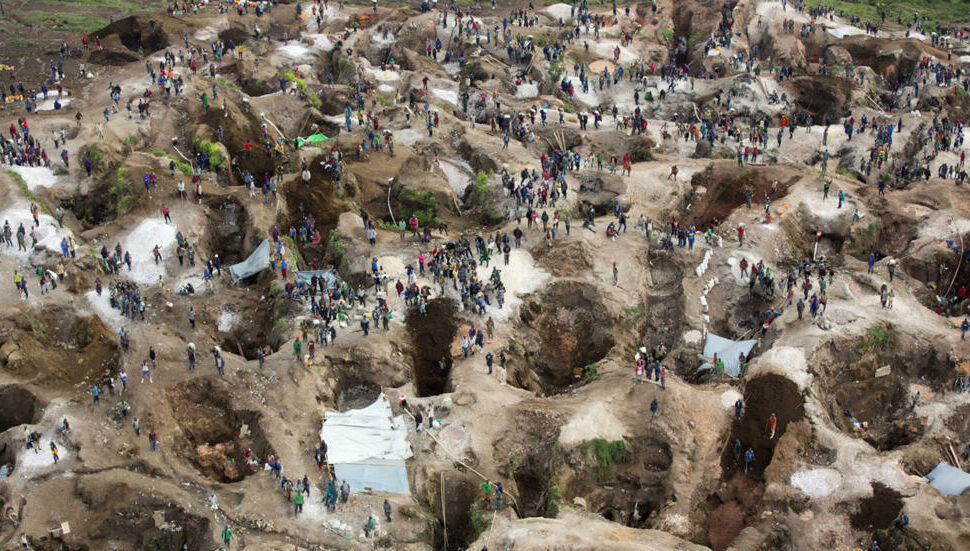
Any joint venture where Chinese firms hold 34% or more equity—excludedCurrent Chinese Dominance: China currently controls approximately 80% of producing mining assets in the Democratic Republic of Congo. Chinese companies dominate cobalt processing (estimated 70% of DRC cobalt exports), copper production, and coltan extraction. The SPA doesn't challenge this dominance through market competition—it creates a parallel system (Strategic Asset Reserve + Qualifying Strategic Projects) where Chinese companies are legally prohibited from participating, effectively bypassing incumbent Chinese operators entirely.
Rhetorical Cover Through Multi-Nation Listing: While China is the obvious target given its 80% market control, the statute's inclusion of Russia, Iran, and North Korea creates plausible deniability. Russian mining presence in DRC is negligible; Iranian investment virtually nonexistent; North Korean entities have no known DRC operations. By invoking a U.S. defense statute listing four adversaries, the SPA avoids appearing as China-specific exclusion. Washington can claim it's implementing standard defense procurement rules rather than discriminatory trade policy. If the agreement explicitly named "China," Beijing could challenge it at WTO, leverage African Union diplomatic pressure, or mobilize developing nations against discriminatory resource nationalism. The 10 U.S.C. § 4872 reference makes exclusion procedural compliance rather than targeted economic warfare.
"Aligned Person" Definition as Secondary Exclusion: If U.S. companies decline Strategic Asset Reserve projects within the nine-month right-of-first-offer window, "aligned persons" can bid. The definition is exclusionary by design: any non-U.S. entity not organized under covered nation laws, not owned one-third or more by covered nations, not controlled by covered nation nationals. This creates qualified bidders: European companies (Glencore, ERG), Canadian firms (Ivanhoe Mines operating Kamoa-Kakula), Australian miners, Qatari investors, Japanese/South Korean companies, and DRC state-owned enterprises meeting ownership thresholds all qualify. But Chinese companies never qualify. Russian entities never qualify. The "aligned person" category creates permanent two-tier access: U.S. firms get preferential rights, U.S. allies get secondary access, covered nations get structural prohibition.
Termination Barriers: Article XVIII requires five years' written notice for termination. Even if a future DRC government wants to exit the agreement and restore Chinese access, it faces a half-decade delay. During those five years, the Joint Steering Committee continues operating, SAR projects remain under U.S./aligned control, and fiscal incentives granted to qualifying projects persist under 10-year tax stabilization clauses.
Geopolitical Implications: This represents legal architecture for permanent exclusion rather than diplomatic negotiation. The one-third ownership threshold prevents circumvention through minority stakes or joint ventures. The self-updating statutory reference closes loopholes. The five-year termination notice locks the framework across political cycles in both Washington and Kinshasa. When the Joint Steering Committee publishes its first Strategic Asset Reserve list (deadline: March 3, 2026), every designated zone will be permanently off-limits to Chinese companies controlling 80% of current DRC production.
Analytical Verdict: The article concludes this is "strategic brilliance disguised as administrative compliance"—geopolitical rivalry transformed into legal architecture where "China isn't excluded because the DRC chose to discriminate; China is excluded because U.S. defense law prohibits procurement from covered nations, and the SPA incorporates that prohibition by reference." The mechanism represents "legal precision disguised as procedural neutrality" creating a system where "Beijing can't compete in a system designed to exclude it by definition."
Sources: US-DRC Strategic Partnership Agreement Annex 2 (December 4, 2025), 10 U.S.C. § 4872(f)(2), Article XVIII termination provisions
Related Topics: 10 USC 4872, covered nations definition, Chinese mining exclusion DRC, Strategic Asset Reserve eligibility, aligned person definition, one-third ownership threshold, CMOC Tenke Fungurume, Zijin Mining DRC, Huayou Cobalt, permanent exclusion mechanism, Joint Steering Committee eligibility
Read More