
- Michael
- Mining Resources
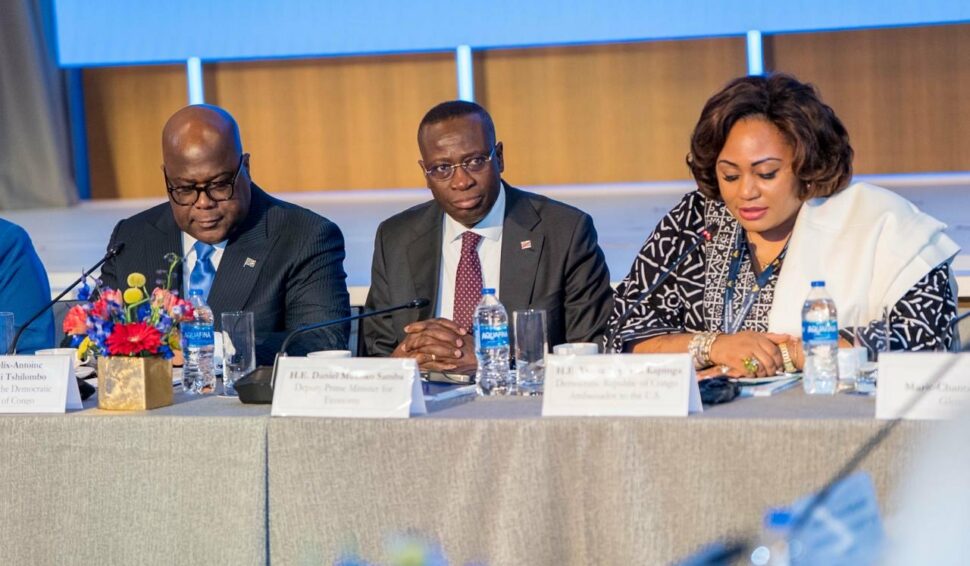
KINSHASA — In his first detailed public comments on the US-DRC Strategic Partnership Agreement’s Strategic Asset Reserve (SAR) list, Vice Prime Minister and Minister of Economy Daniel Mukoko Samba confirmed that 25 state-owned mining concessions have been designated for preferential US investor access—and explicitly tied their development to Rwanda’s military withdrawal from eastern Congo.
Speaking in an exclusive interview, Mukoko Samba deployed a powerful metaphor to describe the partnership’s structure: security and economic development are “the two feet needed to pedal” the same bicycle. The imagery captures Kinshasa’s explicit bargain with Washington—mineral access in exchange for peace enforcement.
The 25 Assets: Rubaya’s Conditional Inclusion
The SAR list comprises 25 mining concessions fully owned by the Congolese state, spanning cobalt, copper, lithium, coltan, and gold deposits across the country. Mukoko Samba confirmed that the strategically vital Rubaya coltan mine in North Kivu—currently controlled by M23 rebels—is included on the list (unlike what we revealed recently).
However, Rubaya’s development under the SPA framework is explicitly conditional on Rwandan troop withdrawal, a provision embedded in the December 2025 peace agreement. The minister framed this as transformative logic: by creating formal, regulated economic activity in conflict zones, Kinshasa and Washington aim to “dry up the financing source for chronic instability in the East.”
“Security and development are not separate tracks—they are the two feet you need to pedal forward together,” Mukoko Samba stated. Without one, the bicycle tips over.
Not a Fire Sale: Diversification as Strategy
Pushing back against domestic criticism that the partnership represents a resource giveaway, Mukoko Samba emphasized the SPA mechanism grants only a “right of first offer”—not automatic attribution—to US entities on available assets.
“Our position is also to diversify, not simply our economy, not simply our mineral resources, but also to diversify our partners,” he said. The agreement does not exclude China, he stressed, but provides leverage to “negotiate better terms in our international economic relations.”
The minister acknowledged that China currently dominates access to Congolese copper and cobalt.
The US partnership, he argued, rebalances the investment landscape while creating competitive pressure that benefits DRC.
Three Project Categories Beyond SAR
Mukoko Samba detailed the agreement’s structure beyond the 25 SAR assets:
Category 1: Strategic Asset Reserve (SAR) — 25 state-owned sites, including Rubaya coltan, cobalt-copper deposits, lithium projects, and gold concessions. US companies receive the right of first offer with exclusive negotiation windows before other actors are considered.
Category 2: DRC Designated Strategic Projects — Large-scale transformative initiatives identified by Kinshasa as central to long-term development, aligned with SPA objectives. These include the Lobito Corridor rail extension, cross-border economic zones with Zambia for battery component manufacturing, and downstream beneficiation facilities to prevent “losing the war of refining.”
Category 3: Qualifying Strategic Projects — Private sector proposals that meet SPA eligibility criteria, including offtake commitments routed through Lobito Corridor where geographically feasible and aligned with US supply chain resilience goals.
Governance: The Fourth Pillar
Beyond minerals, the agreement prioritizes governance reform to address what Mukoko Samba calls the root cause of Great Lakes conflict: “access to minerals through illicit means, especially critical materials from artisanal exploitation.”
Enhanced traceability mechanisms, anti-trafficking enforcement, and strengthened state capacity aim to formalize mineral flows currently financing armed groups. The minister positioned this as a prerequisite to economic success: “Putting order back, reinforcing the Congolese state’s capacities in this domain, appeared important so that our common commercial and economic objectives could be achieved.”
Not a Transaction—A Long-Term Commitment
Mukoko Samba rejected characterizations of the SPA as transactional. “This is not a barter. This is not a barter: it is, I repeat, two states agreeing they have long-term interests,” he emphasized.
“Our long-term interests are economic development in peace, in security. The long-term interests of the United States are access to mineral resources available in our country—access that does not take current forms, of armed groups that proliferate effectively and, exactly, in regions where rare earths and other critical metals are available.”
The parallel signing of a Defense and Security Memorandum of Understanding alongside the economic partnership reinforces this dual-track approach. Minister of Foreign Affairs Thérèse Kayikwamba Wagner signed the security document with the Secretary of State Marco Rubio on December 4, 2025.
The Bicycle Test Ahead
Whether Mukoko Samba’s “two feet” metaphor translates to reality remains the defining test of the SPA. The February 8 commissioning of 7,532 M23 fighters and Erik Prince’s combat deployment to Uvira demonstrate that security volatility persists despite peace agreements.
Minister of Mines Louis Watum Kabamba’s public warning that Kinshasa will seek alternative partners if the US framework fails to produce concrete projects adds domestic pressure. The Joint Steering Committee meeting scheduled for March 4 will reveal whether Washington can balance both feet on the pedals—or whether the bicycle tips toward instability despite the partnership’s ambitious architecture.
For now, the 25 SAR assets remain Kinshasa’s bet that American strategic interest in critical minerals can finally broker the peace that has eluded eastern Congo for decades. Whether development truly follows security, or whether mineral access simply finances new patterns of extraction under different management, will determine if this bicycle actually moves forward.
INTELLIGENCE CONFIDENCE
Mukoko Samba declaration content: 95% confidence based on direct reporting from actualite.cd and cross-referenced with SPA framework documents.
SAR list composition (25 assets): 90% confidence based on ministerial confirmation, though specific asset names beyond Rubaya remain unconfirmed.
Rubaya conditional inclusion: 85% confidence based on the minister’s explicit statements linking development to Rwandan withdrawal under the December 2025 peace agreement terms.
Three-category project structure: 90% confidence from detailed ministerial explanation of SAR assets, DRC strategic projects, and qualifying private sector proposals.
About Ascendance Strategies
Specialized advisory exclusively focused on the US-DRC Strategic Partnership Agreement. Paris-based team bridging Washington, Kinshasa, and Brussels. Services include SAR Opportunity Assessment, Political Risk Due Diligence, and Retainer Advisory across all four SPA pillars, plus competitive intelligence tracking (UAE-DRC CEPA, China).
Contact: [email protected]
Analysis compiled from actualite.cd interview with Vice Prime Minister Daniel Mukoko Samba, cross-referenced with US-DRC Strategic Partnership Agreement framework documents, Joint Steering Committee formation announcements, and confidential discussions with sources familiar with SAR asset designation processes. Assessment represents Ascendance Strategies’ independent analysis of Strategic Partnership implementation dynamics.