
- Michael
- Mining Resources, Partnership Analysis
On January 2, 2026, the Democratic Republic of Congo delivered its Strategic Asset Reserve shortlist to Washington—18 days late, but loaded with high-value copper-cobalt, manganese, and lithium assets. Missing from the list: Rubaya, the North Kivu coltan hub that supplies 15% of global tantalum and generates an estimated $100 million annually in mineral value.
The exclusion wasn’t an oversight. It’s a case study in how the US-DRC Strategic Partnership Agreement actually works—and what disqualifies even world-class mineral deposits from American investment frameworks.
What the SAR Actually Does
The Strategic Asset Reserve, established under Article IV of the December 4, 2025 partnership agreement, grants US companies “right of first offer” on designated critical mineral assets. If no US investor accepts within nine months, projects can open to allies—the EU, Qatar, or DRC itself—but never to “strategic rivals” (read: China, which controls 80% of DRC mining assets).
The mechanism is elegant: DRC designates assets, US investors get exclusive negotiating windows, and successful projects receive exceptional fiscal treatment—ten-year tax stabilization, 90-day VAT refunds, automatic tax credit offsets. In return, the US gains structured offtake guarantees channeling minerals to American supply chains, reducing dependence on Chinese-dominated refining networks.
Critical qualifier: SAR assets must be available for “exploration, development, or extraction” by US persons. This seemingly technical language is the razor that cuts Rubaya from eligibility.
The M23 Problem: Control Trumps Geology
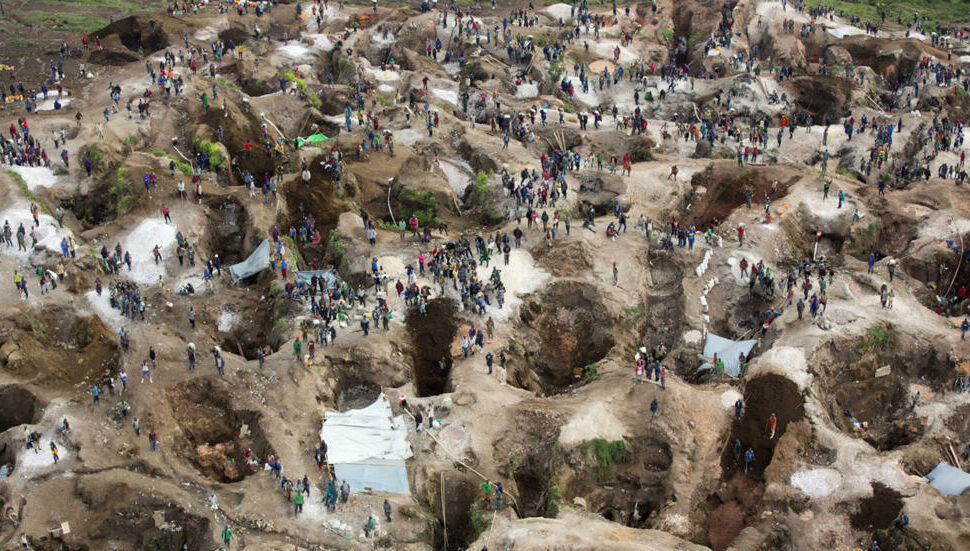
Since April 30, 2024, the M23 rebel group has controlled Rubaya’s sprawling artisanal coltan complex. UN reports document that M23 established a parallel administration collecting $800,000 monthly from a 15% tax on coltan traders, while controlling mining permits, trade authorization, and mineral transport through Goma and Bukavu to Rwandan smuggling networks.
This creates legal impossibility for US investors. Section 1502 of the Dodd-Frank Act prohibits US companies from sourcing “conflict minerals” financing armed groups. A US firm acquiring Rubaya would face SEC enforcement, reputational damage, and potential criminal liability—making the investment legally untouchable regardless of geological value.
The International Tin Supply Chain Initiative classified Rubaya as a “red zone” in February 2024, blacklisting it from certified supply chains. Major tantalum consumers—defense contractors, aerospace manufacturers, electronics companies—cannot source from red zones without comprehensive due diligence proving armed group non-involvement. With M23 physically controlling pit sites and regulating who buys minerals from diggers, such due diligence is impossible.
The Offtake Guarantee Problem
Article XI of the SPA requires SAR projects to provide “right of first offer on marketed critical minerals destined for export” to US persons, with production channeled to American markets. The DRC must guarantee that minerals reach US supply chains, not Chinese refiners via Rwandan laundering networks.
This guarantee is operationally impossible for Rubaya. The DRC government doesn’t control the territory, can’t enforce contracts, and lacks physical access to trading infrastructure. M23 directs mineral flows through Rwandan channels feeding Chinese smelters processing 65-70% of global tantalum. Even if a US investor held paper claims to Rubaya, rebels would continue extracting minerals through parallel channels the investor cannot access.
The SPA’s architects designed the framework to avoid exactly this scenario: US taxpayer dollars financing investments in assets where the host government cannot deliver on contractual commitments.
What Made the Cut: The Mutoshi-Kisenge Pattern
Compare Rubaya’s exclusion with what qualified for SAR designation. The Mutoshi copper-cobalt project in Haut-Katanga sits in stable, government-controlled territory with clear Gécamines ownership and existing road access to Kolwezi. The Kisenge manganese licenses held by state enterprise EMK-MN operate in Lualaba Province with degraded but upgradable colonial-era rail infrastructure.
SAR assets possess secure environments, clear title (even if disputed between commercial parties), government control, and operational feasibility. Rubaya fails every criterion—rebel control, forfeited SMB license, COOPERAMMA cooperative claims contested, and infrastructure limited to motorcycle tracks.
The Reputational Cost
Including Rubaya would undermine the SPA’s foundational premise. The agreement’s preamble emphasizes “responsible sourcing” and “supply chain integrity.” Article III requires DRC to “strengthen good governance, transparency, and respect for international law.”
Offering a rebel-controlled asset to US investors contradicts these commitments, exposing both Washington and Kinshasa to accusations of enabling conflict mineral trade. The political cost outweighs strategic mineral benefits, particularly when Australia, Brazil, and Ethiopia offer conflict-free tantalum supply at marginally higher production costs.
The Timeline Question: When, Not If
US interest in Rubaya is documented. Multiple diplomatic sources indicate Washington views eastern DRC tantalum as strategically essential for defense and aerospace applications. Private communications between US officials and Kinshasa suggest Rubaya would be a priority SAR candidate “once security conditions permit.”
This creates implicit conditionality in the Security Memorandum of Understanding signed December 4, 2025 alongside the SPA. US security assistance—training, equipment, intelligence sharing—is partly conditioned on restoring government control over strategic mineral zones.
If the Doha peace talks produce durable M23 withdrawal and MONUSCO verifies stability, Rubaya could eventually transition toward SAR eligibility within 12-18 months through ITSCI reclassification, license clarification via CAMI, and formal designation under Article IV provisions allowing asset additions “at any point.”
The $800,000 vs. $175 Million Calculation
Under M23 control, Rubaya generates $9.6 million annually for rebels through taxation, while 10,000+ artisanal workers earn $9 daily for 12-hour shifts. The DRC government receives zero tax revenue.
Under formal SAR development with mechanization, conservative projections estimate 2,500 tonnes annual production yielding $175 million gross mineral value, $35-50 million in government revenues, 5,000+ direct employment at professional wages, and $200+ million infrastructure investment.
The economic case for peace is overwhelming. Yet peace depends on variables—Rwandan force withdrawal, M23 disarmament, border demarcation, resource-sharing frameworks—that have eluded the region for decades.
The Strategic Takeaway
Rubaya’s exclusion establishes that geological value alone doesn’t qualify assets for US partnership frameworks. Security, legal title, government control, and operational feasibility are prerequisites. This applies beyond Rubaya to every conflict-affected mineral zone in eastern DRC—Walikale gold, Fizi-Baraka corridor, Nyabibwe tin-tantalum sites.
For investors evaluating DRC opportunities under the SPA, the lesson is clear: examine not just mineral grades and market prices, but territorial control, armed group presence, ITSCI classifications, and government enforcement capacity. The most valuable deposit means nothing if rebels control physical access and smuggling networks capture value chains.
Rubaya will eventually make the SAR list—but only after peace makes it investible. Until then, it remains a $100-million-per-year mineral asset generating subsistence wages, rebel revenues, and humanitarian crises while the legal economy waits for conditions that permit legitimate development.
The question shaping US-DRC mineral cooperation isn’t whether strategic assets like Rubaya matter, but when baseline security conditions will allow them to matter within frameworks designed to benefit both partners—not armed groups exploiting governance vacuums.
Ascendance Strategies provides specialized advisory on the US-DRC Strategic Partnership Agreement, including SAR opportunity assessment, conflict mineral due diligence, and political risk analysis for eastern DRC operations. Contact: [email protected]


