
- Michael
- Updates
Mukoko Samba Confirms Conditional Inclusion Tied to Rwandan Withdrawal
KINSHASA — In a revelation that contradicts our earlier assessments, Vice Prime Minister Daniel Mukoko Samba confirmed on February 12 that Rubaya coltan mine IS included on the US-DRC Strategic Asset Reserve list—but with an explicit condition that makes development dependent on Rwanda’s military withdrawal from eastern Congo.
The disclosure fundamentally reframes understanding of how the Strategic Asset Reserve operates. Rather than excluding conflict-zone assets entirely, the DRC government has designated them conditionally, creating a direct link between mineral access and peace enforcement that Mukoko Samba describes as “the two feet needed to pedal” the same bicycle.
What Changed: From Exclusion to Conditional Inclusion
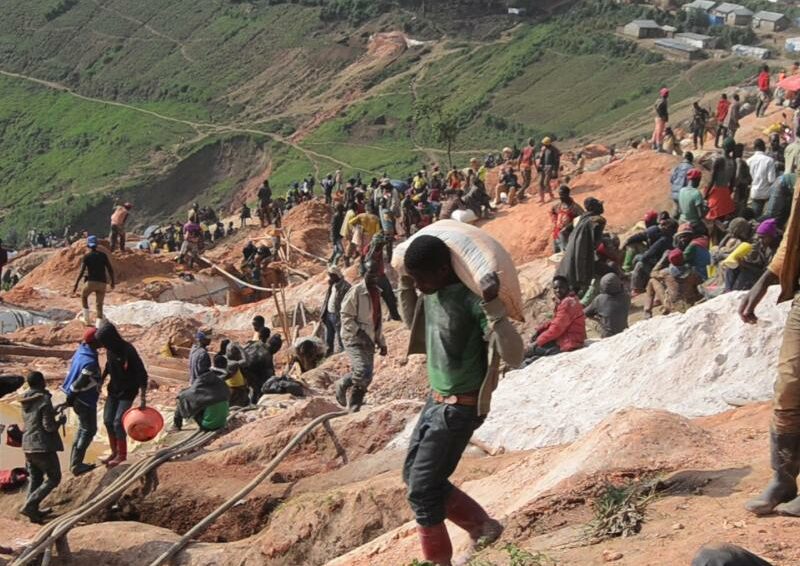
When the DRC delivered its Strategic Asset Reserve shortlist to Washington in early January 2026, Rubaya’s apparent absence seemed logical. The North Kivu coltan hub—which supplies 15% of global tantalum and generates an estimated $100 million annually—has been under M23 rebel control since April 30, 2024.
Mukoko Samba’s February 12 interview with actualite.cd revealed that Rubaya IS among 25 state-owned mining concessions designated for preferential US investor access. However, its development under the US-DRC SPA framework is “explicitly conditional on Rwandan troop withdrawal, a provision embedded in the December 2025 peace agreement.”
This conditional designation represents sophisticated strategic thinking: rather than surrendering Rubaya’s strategic value or offering investors an unworkable asset, Kinshasa created explicit conditionality that transforms mineral access into peace enforcement leverage.
The “Two Feet to Pedal” Framework
Mukoko Samba framed the conditional inclusion using a powerful metaphor: security and economic development are “the two feet needed to pedal” the same bicycle. Without both, the mechanism collapses.
For Rubaya specifically, this means:
Foot One (Security): Rwanda withdraws forces enabling M23 control, MONUSCO verifies stability, and the DRC government reestablishes territorial authority over the Rubaya territory and trading infrastructure.
Foot Two (Economic Development): US investors receive a right of first offer on Rubaya coltan assets; DFC financing supports mechanization that replaces artisanal operations; and formal development generates government revenues and professional employment, replacing rebel taxation and subsistence wages.
The framework makes explicit what was previously implicit in US-DRC security cooperation: American mineral access depends on the materialization of peace dividends in conflict zones.
Why Conditional Designation Makes Sense
The January 28-29 Rubaya mine collapse—which killed over 200 artisanal workers—demonstrated the human cost of leaving the deposit under informal rebel-controlled exploitation. The tragedy prompted government suspension orders that may cascade to other artisanal coltan sites, creating pressure for formalization alternatives.
Conditional SAR designation offers a structured pathway forward:
- Peace agreement incentive structure: Rwanda knows Rubaya SAR development (with attendant US investment, DFC financing, and infrastructure benefits) requires withdrawal, creating economic pressure complementing diplomatic negotiations.
- Legal framework preparation: Including Rubaya on the SAR list now allows preparatory work—license clarification via CAMI, ITSCI reclassification protocols, investor due diligence frameworks—so development can proceed rapidly once security conditions permit.
- Dodd-Frank compliance pathway: Conditional designation acknowledges current conflict mineral status while establishing mechanisms for transition to compliant sourcing once armed group control ends.
- Strategic signaling: Washington signals long-term commitment to eastern DRC stabilization, not just exploitation of easily accessible southern assets like Mutoshi and Kisenge.
The M23 Obstacle Remains
Conditional inclusion doesn’t solve Rubaya’s immediate problems. M23 expanded its forces by 7,532 fighters on February 8 in a ceremony analysts suspect featured disguised Rwandan Defence Force personnel. Erik Prince’s mercenaries deployed combat support to recapture Uvira, demonstrating that security volatility persists despite peace agreements.
Even after MONUSCO interim chief Vivian van de Perre’s symbolic February 12 landing at Goma airport—the first aircraft since M23’s January 2025 seizure—the rebel group maintains territorial control. Angola continues proposing new ceasefire frameworks as mediation efforts struggle against persistent armed group dominance.
For US investors, these developments mean Rubaya remains legally untouchable under Dodd-Frank Section 1502 until verifiable M23 withdrawal and government control restoration. The asset’s SAR designation provides a framework and priority, but not immediate investability.
The Right-of-First-Offer Mechanism
Mukoko Samba emphasized that SAR designation grants only a “right of first offer”—not automatic attribution—to US entities. Once security conditions permit Rubaya development, the process would unfold:
- DRC government notifies US investors of Rubaya availability
- US companies receive an exclusive nine-month negotiation window
- Proposals must include offtake commitments, DFC financing participation, and fiscal stabilization utilization
- If no US investor accepts, access opens to allies (EU, Qatar, UAE) or the DRC itself
- “Strategic rivals” (China) remain excluded under Article IV provisions
This structure allows flexibility while maintaining strategic priority. A US mining company or private equity consortium could acquire Gécamines partnership stakes, develop mechanized operations replacing artisanal mining, and channel tantalum production to American defense and aerospace supply chains—but only after peace makes this operationally feasible.
The Three-Category Framework
Rubaya’s conditional SAR status sits within Mukoko Samba’s broader three-category project structure:
Category 1 – SAR Assets (25 sites): State-owned concessions including Rubaya (conditional), accessible copper-cobalt deposits, lithium projects, and gold concessions. Right of first offer with exclusive negotiation windows.
Category 2 – DRC Strategic Projects: Lobito Corridor rail extension, Zambia cross-border battery manufacturing zones, and downstream beneficiation facilities.
Category 3 – Qualifying Private Projects: Private proposals meeting SPA criteria with offtake commitments routed through Lobito Corridor where feasible.
Eastern zone assets like Rubaya occupy conditional Category 1 status, while southern mining belt assets (Mutoshi, Kisenge, Kamoa-Kakula expansion discussions) operate under standard SAR provisions without security prerequisites.
What This Means for Timeline
Conditional designation transforms the question from “Will Rubaya ever qualify?” to “When do conditions permit activation?”
The December 2025 peace agreement includes Rwandan withdrawal commitments, though implementation remains contested. If Angola’s mediation produces verifiable M23 disarmament and RDF pullback within 12-18 months, Rubaya could transition rapidly:
- ITSCI reclassification from red zone to compliant sourcing (3-6 months post-withdrawal)
- CAMI license clarification and Gécamines partnership structuring (6-9 months)
- DFC due diligence and financing approval (6-12 months)
- US investor consortium formation and right-of-first-offer exercise (9-12 months)
Total timeline: 24-39 months from verified peace to production, assuming security holds and governance reforms advance.
However, M23’s February 8 force expansion and continued territorial control suggest this timeline remains aspirational. The bicycle metaphor works only if both feet actually pedal—and currently, the security foot isn’t moving.
The $800,000 vs. $175 Million Stakes
The economic case for Rubaya’s transition from rebel exploitation to formal SAR development is overwhelming:
Current State (M23 Control):
- $9.6 million annual rebel taxation revenue
- 10,000+ artisanal workers earning $9 daily for 12-hour shifts
- Zero government tax revenue
- Periodic mine collapses killing hundreds
- Tantalum exports through Rwandan smuggling networks feed Chinese refiners
Potential SAR Development:
- 2,500 tonnes annual production yielding $175 million gross mineral value
- $35-50 million government revenues through formal taxation
- 5,000+ direct employment at professional wages with safety standards
- $200+ million infrastructure investment connecting to the Goma-Lobito corridor
- Tantalum channeled to US defense and aerospace supply chains
The economic transformation is substantial—but entirely dependent on security conditions that have eluded the region for decades, materializing through peace agreement implementation.
Competitive Pressure: China’s Zijin Launches Lithium in June
Rubaya’s conditional status takes on added urgency as China’s Zijin Mining prepares to launch Congo’s first lithium production in June from the disputed Manono deposit. The timing directly challenges US efforts to redirect Congolese critical minerals toward Western markets, demonstrating Beijing’s continued operational dominance despite the SPA framework.
If Rwanda maintains M23 control over Rubaya while Chinese companies activate accessible southern assets like Manono, the strategic balance tilts further toward Beijing. Conditional SAR inclusion becomes meaningless if conditions never materialize while competitors capture market share in conflict-free zones.
Minister Watum’s Warning Adds Pressure
DRC Mines Minister Louis Watum Kabamba’s public warning at Mining Indaba that Kinshasa will seek alternative partners if the US framework fails to produce concrete projects adds domestic political pressure. Rubaya’s conditional designation demonstrates SPA ambition, but if security never permits activation, the government faces criticism for offering strategic assets with undeliverable conditions.
Mukoko Samba positioned diversification as a strategy, explicitly stating “the agreement does not exclude China” and emphasizing leverage to “negotiate better terms in our international economic relations.” If Rubaya remains frozen by conflict while accessible assets proceed under Chinese partnerships, the conditional designation becomes a symbolic gesture rather than an operational mechanism.
The Strategic Takeaway: Conditionality as Leverage
Rubaya’s inclusion on the SAR list—conditional on Rwandan withdrawal—represents the DRC government’s most explicit linkage yet between mineral access and peace enforcement. It transforms Rubaya from an excluded asset to a peace dividend, creating economic incentive structures that complement diplomatic negotiations.
For US policymakers, this means:
- Security assistance to DRC has direct SAR asset activation implications
- Rwanda faces explicit economic consequences (foregone Rubaya development benefits) if M23 control persists
- Peace agreement implementation can be measured partly through SAR asset accessibility rather than just ceasefire compliance
For investors, conditional designation provides:
- Framework certainty for long-term strategic planning
- License to conduct preparatory due diligence despite the current inaccessibility
- Priority positioning for right-of-first-offer activation if/when conditions materialize
For eastern DRC communities, it offers:
- Structured alternative to perpetual informal artisanal exploitation
- Economic case for supporting peace implementation
- Potential pathway from subsistence wages and mine collapse risks to formal employment
The Bicycle Test
Whether Mukoko Samba’s “two feet to pedal” metaphor translates to reality at Rubaya remains the defining test of whether the Strategic Asset Reserve can actually transform conflict zones or merely rationalizes exploitation of easily accessible areas.
The February 8 M23 commissioning of 7,532 new fighters, Erik Prince’s combat deployment, and continued rebel territorial control demonstrate the security foot isn’t pedaling yet. Until Rwanda withdraws and the DRC government reestablishes control, Rubaya’s SAR designation represents strategic intent rather than an investable opportunity.
But conditional inclusion means the pathway exists. The question is no longer whether Rubaya qualifies for the Strategic Asset Reserve—Mukoko Samba confirmed it does. The question is whether peace will materialize to activate the designation, or whether Rubaya remains perpetually conditional, generating rebel revenues while the formal economy waits for conditions that may never arrive.
INTELLIGENCE CONFIDENCE
Rubaya conditional SAR inclusion: 85% confidence based on Mukoko Samba’s explicit statements linking development to Rwandan withdrawal per December 2025 peace agreement terms, confirmed through actualite.cd interview February 12, 2026.
SAR list composition (25 assets): 90% confidence based on ministerial confirmation, though specific asset names beyond Rubaya remain unconfirmed.
M23 control status: 95% confidence based on UN reports, ITSCI classifications, and February 8 fighter commissioning ceremony evidence.
Conditional activation timeline: 40% confidence—depends on variables (Rwandan withdrawal, M23 disarmament, border demarcation) that have eluded the region for decades.
About Ascendance Strategies
Specialized advisory exclusively focused on the US-DRC Strategic Partnership Agreement. Paris-based team bridging Washington, Kinshasa, and Brussels. Services include SAR Opportunity Assessment, Political Risk Due Diligence, and Retainer Advisory across all four SPA pillars, plus competitive intelligence tracking (UAE-DRC CEPA, China).
Contact: [email protected]
Analysis compiled from actualite.cd interview with Vice Prime Minister Daniel Mukoko Samba, UN Group of Experts reports on M23 control, ITSCI red zone classifications, US-DRC Strategic Partnership Agreement framework documents, and confidential discussions with sources familiar with SAR asset designation processes and eastern DRC security dynamics. Assessment represents Ascendance Strategies’ independent analysis of Strategic Partnership implementation dynamics.