
- Michael
- SPA Intelligence Briefs
EXECUTIVE SUMMARY
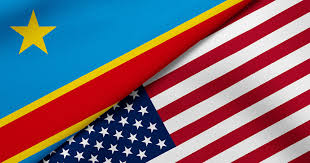
The week of April 13-17 delivered more simultaneous SPA-relevant developments than any comparable period since December 4. Two landmark decrees gave the SAR its first legal container. The National Assembly voted 346-7 to admit both ratification bills and sent them to committee, the final procedural step before a plenary vote. KoBold Metals launched what it calls the largest lithium exploration campaign in history in Tanganyika. Massad Boulos confirmed that US pressure halted M23’s march on Kisangani and forced its withdrawal from Walikale. James Swan assumed MONUSCO leadership. And Rwanda’s foreign minister described “significant progress toward peace” for the first time since December 4. The SPA’s political, legal, commercial, and security tracks moved simultaneously this week. They are not yet aligned. But they are moving.
Alert Level: HIGH — SAR legal framework formalized. Ratification plenary vote imminent. Eastern access blocked. Remaniement pending. Constitutional challenge active.
Overall SPA environment: 7.0/10 — ELEVATED-ACTIVE
Two Decrees. The SAR Now Has a Legal Container.
On April 10, the Council of Ministers adopted two decrees presented by Minister of Mines Louis Watum. The first establishes the formal legal framework for the Strategic Reserve of Strategic Mineral Substances. The second amends the 2019 text governing ARECOMS, the authority regulating strategic mineral substance markets, strengthening traceability and quota architecture.
These are not political announcements. They are legal acts. Every SPA-aligned investor conducting due diligence on SAR assets was previously operating on political commitment rather than a statutory instrument. That gap is now closed. The SAR shortlist of approximately 44 assets — including Rubaya coltan and tantalum as the highest-visibility test case — now has a legal container. ARECOMS’s strengthened mandate tightens state control over strategic mineral flows in direct alignment with SPA Article IX’s volume commitment architecture, which requires, at a minimum, 50% of copper, 90% of zinc, and 30% of cobalt to flow via Lobito to the United States within five years.
The FSD-FARDC Fund, established by the March 2026 ordinance, is now in active operationalization. It finances equipment, logistics, troop welfare, and military programming. Combined with the record approximately 30% defense allocation in the 2026 national budget — the highest share in recent DRC history — it represents a materially strengthened FARDC capacity directly relevant to the protection of critical infrastructure and SAR assets in the east.
Ratification: 346-7. The Plenary Vote Has Not Yet Occurred.
On April 13, the National Assembly held a plenary session on both ratification bills — the US-DRC SPA and the DRC-Rwanda Peace Agreement — presented by Foreign Affairs Minister Thérèse Kayikwamba Wagner. The admissibility vote was 346 for / 7 against / 2 abstentions on a total of 355 voters. The bills were immediately sent to the Foreign Relations Committee with a 24-hour deadline to submit its report before the plenary ratification vote.
The majority of the floor debate was supportive. Even opposition members from Ensemble and the Non-Inscrits group spoke in favor, prompting MP Pierre Sumeyi’s incidental motion to cut debate short: those who had spoken across the political spectrum had all supported the agreements, he argued; there was no point extending discussion.
Substantive concerns were raised, but did not block the admissibility vote. Ensemble’s Célestin Musao flagged structural imbalance and resource protection. Former Senate Foreign Affairs Committee president Francine Muyumba Furaha Nkanga went further on April 13, stating publicly that the process itself violates Articles 213-214 of the Constitution, which require parliamentary authorization before, not after, international agreements enter force. “What is being presented is not a normal procedure. It is a retroactive regularization of a constitutional violation,” she wrote. This procedural challenge, which connects to the constitutional case filed by Congolese lawyers in January 2026, is live as the plenary vote approaches.
The plenary ratification vote has not been confirmed as adopted at publication. The Committee report and final vote are expected in the days immediately following April 17. When adopted, it starts the Article XII 12-month reform clock, with a December 2026 deadline for fiscal and regulatory reform delivery.
Switzerland: Technical Agreements Signed. US Operationally Engaged.
The ninth round of DRC-M23 negotiations ran in Switzerland from April 13 to 17 under the Doha process. Massad Boulos represented the US in person. New technical agreements were signed — scope not yet public. The framework contains eight pillars; two previously signed, on ceasefire verification and prisoner exchange, remain unimplemented. Fighting continued on the ground throughout the talks: FARDC and Wazalendo clashed with M23 in Kalehe (South Kivu) and Masisi (North Kivu) simultaneously with the negotiations.
The defining signal came from Boulos on April 17. He confirmed publicly that US pressure directly halted M23’s offensive toward Kisangani — the DRC’s fourth largest city — and led to M23’s withdrawal from Walikale town. He also met separately with both Tshisekedi and Kagame in early April to lay the groundwork. This is not diplomatic language. It is Washington confirming it made operational decisions in a live conflict.
One shadow on the talks: Mediacongo reported on April 13th that figures from Kabila’s political networks appeared in the AFC/M23 negotiating delegation in Switzerland. If confirmed, it means the Kingakati thread — Kabila’s hold on Tshisekedi’s 2018 legitimacy question — is now embedded in the peace negotiation itself, not merely in Kinshasa’s domestic political calculus.
Rwanda Adjusts. The EU EPF Clock Is Running.
Rwandan Foreign Minister Olivier Nduhungirehe stated on April 15 that Qatari-mediated talks resulted in “significant progress toward peace” — the most positive public signal from Kigali since December 4. It coincides with M23’s withdrawal from Walikale under direct US pressure. Rwanda is adjusting its posture under compound fiscal and reputational pressure: RDF SDN designations from March 2, EU European Peace Facility for RDF operations in Mozambique expiring May 2026, UK bilateral aid down 40%, German contributions cut 27%. The compliance cost rises each month.
The gap between “significant progress” and verified military withdrawal remains real. No RDF withdrawal from eastern DRC has been confirmed. FARDC and Wazalendo continued attacks on M23 positions in Kalehe and Masisi during the talks. The détente is diplomatic. The proxy war continues below it.
KoBold Metals: The US-China Lithium Race Opens in Tanganyika.
On April 13, KoBold Metals (Bezos/Gates) launched what it calls the largest lithium exploration campaign in history — more than $50 million through early 2027, 13 permits, 3,000 square kilometers, Manono region, Tanganyika province. The company has already paid more than $20 million to the DRC’s treasury to secure the permits. CEO Kurt House: “A year ago, KoBold had no employees and no land in Congo. Today, we are the largest American investor in the country.” US Under Secretary of State Jacob Helberg endorsed the announcement publicly on April 15.
Three tensions define the field. AVZ Minerals (Australia) is in international arbitration claiming the July 2025 KoBold-DRC agreement violates its existing rights to the Manono Block. Zijin Mining (China) is reportedly preparing DRC’s first lithium production in the same Manono region. And KoBold’s AI-driven model depends on colonial-era geological data held by the Royal Museum for Central Africa in Brussels, which has refused access. The SPA’s treaty interest in Belgian geological archives is now an active commercial dispute, not a theoretical provision.
SPA Article XIV, providing technology assistance to de-risk precisely this type of investment, has not yet been deployed. Its deployment is the next logical step to protect both the KoBold campaign and the broader US lithium position in Tanganyika.
James Swan / MONUSCO: Three Simultaneous US Vectors in DRC.
James Swan assumed MONUSCO leadership on April 7 and was received by Tshisekedi on April 14. His stated priorities: civilian protection, ceasefire verification mechanism operationalization, DDR, security sector reform, and airport reopening in North and South Kivu. MONUSCO’s mandate under UNSCR 2808 runs to December 2026. South Africa is withdrawing its 700+ peacekeepers by the end of 2026.
Swan’s appointment concentrates three simultaneous US vectors in DRC: Boulos at State (diplomatic-operational), Swan at MONUSCO (UN operational), and KoBold (commercial). This is the most concentrated US engagement in DRC since independence. Kinshasa’s expectation is explicit: MONUSCO must move beyond observation to become a technical guarantor of regained sovereignty in occupied zones.
Energy, Infrastructure, and Banking
Ruzizi III (TotalEnergies, 206MW) discussions are advancing on potential demilitarized zone designation under the Washington Accords framework. If agreed, it becomes the operational model for economic integration coexisting with active conflict. DRC and South Africa are scheduled for high-level Inga 3 talks in April 2026, with a potential export target of 5,000MW. The Lobito Corridor Mota-Engil concession for the Congolese segment (Sakania-Lobito) remains Washington’s flagged strategic priority. ENGIP-RDC and SEP-Congo contracts signed April 7 stand as the most concrete expression of petroleum infrastructure sovereignty this week.
The BCC is advancing IMF-supported bank recovery and resolution frameworks, with a new instruction expected by mid-2026 covering liquidity stress testing and correspondent banking risks. DFC and multilateral partners remain active in de-risking mechanisms for SAR-linked projects. No new SPA-specific financing announcements this week.
Political: Remaniement Pressure, Constitutional Friction, Local Content
The April 17 Conseil des Ministres was flagged by multiple Kinshasa sources as possibly the last of Suminwa II. No ordinance has been issued as of publication. The remaniement — promised since mid-2025 — remains pending, with Mines, Energy, and Infrastructure portfolios cited as the primary SPA delivery evaluation criteria. A ministerial transition at this precise moment — SAR framework just formalized, ratification plenary vote imminent — creates short-term risk to deal flow continuity.
The constitutional challenge to the ratification process adds a distinct friction layer. Muyumba’s April 13 statement and the January 2026 court filing represent a procedural vulnerability that opponents of the SPA can activate even after a successful plenary vote. Watch for any referral to the Constitutional Court.
Filimbi and allied civil society organizations escalated criticism of “sous-traitance migratoire” — preferential foreign labor use in mining and infrastructure — this week. The ARSP enforcement wave (408+ radiations, mid-May appeal deadline) and the civil society pressure are moving in the same direction, applying pressure on the same supply chain from two different angles.
DRC Economy Rating | April 2026
Overall: 5.2/10 — Transitional, Elevated Risk (up from 4.8, April 10)
Macro Stability: 6.5 — Eurobond standing, BCC disinflation, 6.2% growth forecast. Unchanged. Investment Climate: 5.0 — SAR legal framework formalized. KoBold $50M signal. AVZ arbitration and Zijin competition add complexity.
Political Risk: 3.5 — Remaniement pressure. Constitutional challenge active. Basengezi compliance problem unresolved. Security: 3.5 — M23 Walikale withdrawal confirmed. Boulos operational engagement is positive. Proxy fighting continues in Kalehe and Masisi.
Governance and Rule of Law: 5.5 — SAR and ARECOMS decrees in force. ARSP enforcement credible. FSD-FARDC fund operationalizing. Strategic Positioning: 6.0 — Three US vectors simultaneously. KoBold largest American DRC investor. Ratification plenary vote pending.
Key upside: SAR legal container, Boulos M23 withdrawal, KoBold launch, 346-7 admissibility vote. Key downside: Ratification plenary not yet confirmed, Basengezi unresolved, remaniement risk, Rubaya access blocked, constitutional challenge live.
Ratings are Ascendance Strategies’ proprietary assessments based on verified primary source analysis. Not investment advice. Updated weekly.
Risk Register
Constitutional challenge to ratification procedure — Articles 213-214: MEDIUM (new this week)
Remaniement causing SPA delivery delay at critical juncture: HIGH Basengezi installed, no US response, compliance problem active: HIGH
Eastern access to SAR assets (Rubaya, Bisie) blocked by M23 presence: HIGH AVZ
Minerals arbitration over Manono Block threatening KoBold program: HIGH
Zijin Mining’s first lithium production in Manono, competing with KoBold: ELEVATED
Tshisekedi’s third-term signals — constitutional revision debate active: ELEVATED
Belgian archives dispute blocking KoBold AI exploration model: ELEVATED
Ruzizi III financial close requiring peace track to hold: ELEVATED
ELNA Holdings beneficial ownership unverified: ELEVATED
ARSP 408+ radiations, mid-May appeal deadline: ELEVATED
Orion-Glencore / Gertler royalty stall: ELEVATED
Sicomines audit, Episode 17 pending: MEDIUM-HIGH
BCC forex reform April 2027 dollar import ban, supply chain exposure: MEDIUM-HIGH
Article XII December 2026 clock starts on ratification: MEDIUM-HIGH
What to Watch
DAYS — National Assembly plenary ratification vote. Adoption starts the Article XII clock.
DAYS — Remaniement ordinance. Track Mines, Energy, and Infrastructure assignments immediately if issued.
DAYS — Constitutional Court referral on ratification procedure. Watch for any formal filing by opponents.
APRIL — Switzerland talks outcome document. What the technical agreements actually contain.
APRIL — Ruzizi III demilitarized zone decision. Watch for the joint DRC-Rwanda-US statement.
APRIL — Inga 3 DRC-South Africa high-level talks.
MAY 1 — DRC-China duty-free MOU activates. No US counter-measure announced.
MAY 2026 — EU EPF for RDF expires. Rwanda’s compliance calculus shifts materially.
MAY 19-20 — Critical Materials Conference, Washington, DC. Watch for SAR commitments and Article XIV deployment signals.
MID-MAY — ARSP 408+ appeal deadline. Watch which sectors see the fastest Congolese-majority subcontractor substitution.
ONGOING — KoBold Belgian archives dispute. Article XIV deployment.
ONGOING — ELNA Holdings beneficial ownership. DRC contact query pending.
ONGOING — Kabila network presence in AFC/M23 Switzerland delegation. Verify against Tier 1 sources.
ONGOING — Sicomines audit Episode 17.
DECEMBER 2026 — Article XII reform clock deadline. All SPA fiscal and regulatory commitments are due.
The week’s defining paradox: the DRC’s parliament voted 346-7 to advance the SPA ratification while a former Senate committee president argued the process itself violates the Constitution. The SAR has its legal container. The Article XII clock is about to start. And Washington’s most direct operational intervention in eastern DRC in years halted an M23 offensive and forced a withdrawal. The framework is strengthening. The contradictions inside it are not disappearing.
Washington. Paris. Kinshasa.