
- Ascendance Team
- SPA Intelligence Briefs
EXECUTIVE SUMMARY
Alert Level: HIGH — DRC-Rwanda Washington Talks Produce Commitments Without Verification; Military Cooperation Waiver Activates SPA Security Pillar; Orion-Glencore $9B MOU Confirmed; Pentagon Minerals Deadline Today; ADF Advances Toward Kisangani; Lukwebo Resigns Under Constitutional Pressure; OFAC April 1 Thirteen Days Away
Five pressure tracks ran simultaneously this week. Washington is executing its SPA architecture with coherence. Kinshasa’s domestic politics are fracturing at the worst possible moment.
Washington Locks In the Architecture
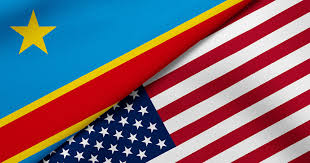
On March 17-18, DRC and Rwanda representatives met in Washington and agreed to concrete steps to further implement the Washington Accords: scheduled RDF disengagement from defined DRC territory, time-bound FDLR neutralization by Kinshasa, and civilian protection commitments. The talks were the first direct engagement since OFAC sanctioned the Rwanda Defence Force on March 2.
The same language appeared in previous agreements that were subsequently violated. Without a verification mechanism, the commitments are diplomatic wallpaper. The analytical question is not whether the talks succeeded; it is whether the OFAC clock, which expires April 1, produces enough on-the-ground movement to justify a General License extension. If it does, the REIF activates, and eastern DRC assets enter the SAR pipeline. If it does not, the SPA’s most strategically valuable concessions remain inaccessible.
One day before the talks, on March 16, Washington issued a partial waiver lifting child soldier restrictions on military assistance to the DRC, authorizing International Military Education and Training and Peacekeeping Operations programs. This is the SPA’s Article III security cooperation pillar activating. The sequence — OFAC sanctions Rwanda, waiver rewards Kinshasa, DC talks extract commitments — is not coincidental. It is a coordinated pressure architecture.
The $9B Signal and the First SAR Close
At the February 4 Critical Minerals Ministerial, US Deputy Secretary Landau witnessed the signing of a memorandum of understanding between Glencore and the US-backed Orion Critical Mineral Consortium for a potential acquisition of approximately 40% of Glencore’s DRC assets — Kamoto Copper Company and Mutanda — in a transaction valued at approximately $9 billion. Orion CMC is DFC-backed with $1.8 billion committed. A full analysis of this transaction is forthcoming through our newsletter.
The first SAR transaction under the SPA closed on March 13 when the DRC government approved Chemaf’s acquisition by US-backed Virtus Minerals.
The official narrative describes the SPA working as designed. The fuller picture — including a superior Congolese competing bid and the ousting of Gecamines’ leadership that opposed the outcome — will be released to newsletter subscribers shortly.
The Pentagon sent an urgent request to the Defense Industrial Base Consortium on March 1, one day before the Iran strikes, seeking proposals by today, March 20, for projects to mine, process, or recycle 13 critical minerals, including germanium, tungsten, and yttrium. Awards range from $100 million to over $500 million. China is the dominant global producer of all 13. DRC cobalt, copper, and germanium sit in the direct downstream of this demand signal.
Security Vacuum Widens as ADF Pushes West
On the night of March 16-17, ADF fighters from Lubero’s Bapere advanced into the Okapi Wildlife Reserve, attacked the Babesua patrol post, and killed at least 19 civilians. Local sources assess the movement as a relief operation toward ADF commander Musa Baluku’s Walese-Karo bastion, under pressure from recent FARDC-UPDF bombardments, via the Mambasa-Isiro corridor toward Kisangani.
FARDC redeployment to counter M23 in the east is creating the security vacuum that the ADF is exploiting in Ituri and northern North Kivu. ADF activity on the Kisangani axis threatens the northern mineral supply chain and humanitarian access routes. Investors with Kibali gold, Sokimo SAR, and Bisie tin corridor exposure should treat this as an active risk.
Kinshasa’s Constitutional Fracture
Modeste Bahati Lukwebo resigned as Senate second vice-president on March 18 after a petition for his removal gathered 83 of 109 senators.
His offense: stating on March 4 that “mentalities must change before texts change” — interpreted as opposition to constitutional revision backed by the Union Sacree coalition. The special commission ruling on the petition is still convening today despite his resignation.
The same morning, MP Tony Mwaba tabled a draft organic law on referendums at the Assemblée nationale, advancing the constitutional revision track. Opposition parties are calling the push suicidal during wartime occupation. Constitutional revision consumes parliamentary bandwidth that should be directed at the US-DRC SPA implementing legislation. It also signals to foreign investors that Kinshasa’s political bandwidth is divided.
Separately, the DRC and South Africa confirmed April 2026 talks to revive Inga 3, with a renegotiated export target of up to 5,000 megawatts to South Africa. The World Bank’s $1 billion ten-year preparation program is active, with the first tranche approved in June 2025.
What to Watch
April 1: OFAC GL 1 expires. Full RDF blocking. 50% rule cascades.
April 2026: DRC-South Africa Inga 3 resumption talks.
Ongoing: Orion-Glencore MOU final terms; Chemaf/Virtus/Buenassa full analysis (newsletter); Constitutional Court ruling; Sicomines audit progress.
Risk Assessment
Security — Eastern DRC / M23: 9.0/10 — CRITICAL
Security — ADF / Kisangani corridor: 7.5/10 — HIGH
OFAC / RDF compliance (April 1): CRITICAL — 13 days
Constitutional revision track: MEDIUM — watch closely
Pentagon minerals emergency: HIGH — deadline today
Inga 3 / energy pillar: MEDIUM — positive trajectory
Overall SPA environment: 6.0/10 — ELEVATED
For Mining Companies and Operators:
- Complete RDF counterparty screening before April 1. The 50% rule cascades to indirect exposures.
- Eastern DRC and the Kisangani corridor are actively deteriorating.
- Southern SAR corridor remains the near-term operational track.
For Investors: - The Orion-Glencore MOU is the clearest proof of concept the SPA has produced.
- DFC capital at scale, anchored to Glencore’s existing operational infrastructure. Model your positioning relative to this deal before final terms are announced.
- Watch the constitutional track for parliamentary bandwidth implications on SPA implementing legislation.
For Legal and Advisory: - OFAC April 1 is a hard deadline. Clients with Rwanda-linked entities, supply chains, or financing structures need exposure assessments now.
- The Chemaf precedent — US operator placement over a superior Congolese bid — will be contested.
- Monitor Gecamines governance developments as a leading indicator for future SAR transactions.
Thanks for reading!
Analysis compiled from: State Department joint statement March 18, 2026; OFAC designation March 2, 2026; Actualite.cd; Radio Okapi; Copperbelt Katanga Mining; Reuters; Glencore 2025 Annual Report; Ascendance Strategies analysis and discussions with DRC government officials and sources familiar with SAR processes.
Washington. Paris. Kinshasa.