
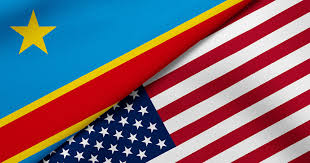
Alert Level: HIGH — Targeted Attack Kills UNICEF Worker in Goma; EU Ends RDF Mozambique Funding; Iran War Freezes GCC Capital Pipeline; Ituri Mining Sites Attacked; Sicomines Audit Launched; DRC Opens First State Gold Refinery; SPA Ratification Bills Tabled for March 16
Four pressure fronts converged this week — and the most consequential made no noise at all.
On March 11, a targeted attack on a residential building in central Goma killed French UNICEF worker Karine Buisset and at least two others. Forensic indicators visible in footage — hundreds of perforation impacts consistent with automatic fire (~7.62mm), structural roof collapse, secondary fire, police perimeter — are consistent with a targeted paramilitary assault, possibly involving grenades or incendiary munitions. Method and perpetrator remain formally unconfirmed. Muyaya denied government responsibility, reaffirming its commitment to international humanitarian law.
French President Macron called for respect for IHL. MONUSCO condemned the attack.
The same day, FARDC conducted separate strikes targeting senior M23 officials in Goma, shot down one-way attack drones near Minembwe in South Kivu, and recaptured a village west of Masisi with Wazalendo fighters. M23 clashed with pro-government forces on the RP529 in Walikale.
Overnight March 11–12, unidentified armed men attacked the Muchacha and Mavuvu artisanal mining sites in Mambasa territory, Ituri, burning homes and forcing miners and residents to flee.
The Doha ceasefire architecture is formally in place. In practice, the conflict is active on five simultaneous fronts.
The Silent Front: GCC Capital Frozen by the Iran War
The week’s most consequential development for SPA implementation went unannounced. The capital architecture behind the SPA was built on a three-party logic: GCC sovereign wealth funds — PIF, Mubadala, ADQ — would anchor the US private equity vehicles positioned to deploy into SAR-protected assets. Those US firms, armed with preferential access and security guarantees, would develop the cobalt blocks, copper licences, and coltan concessions.
The EXIM advisory committee appointed February 27 tells you who was in position: Atlas Merchant Capital, Gateway Partners, Orion Resource Partners — whose $1.2 billion ADQ joint venture was structured explicitly for critical minerals including DRC.
The Gulf money was not a bonus. It was the balance sheet depth that made the math work.
Operation Epic Fury broke that sequence. By March 2, Gulf exchanges had suspended trading. By March 5, Saudi Arabia, the UAE, Kuwait, and Qatar had opened internal reviews of their overseas investment portfolios, asking whether force majeure clauses could be invoked to exit commitments they could no longer honor. PIF’s $600 billion US commitment is under review. Mubadala’s LP positions in US infrastructure funds positioned toward the DRC are under review. ADQ’s minerals vehicle with Orion is halted.
The US firms did not immediately lose capital. But they lost certainty about follow-on commitments and appetite for long-horizon illiquid positions in high-risk jurisdictions. Fund managers do not deploy into new DRC commitments when their anchor LPs are managing a war.
The Powering Africa Summit on March 19–20 assembles EXIM, DFC, Energy Secretary Wright, and DRC’s electricity regulator. Every presenter must answer one question no one can currently answer: what replaces GCC anchor capital in the SPA pipeline?
In Kinshasa, the coalition convening March 16 to ratify the SPA is watching for wire transfers, not press releases.
EU Ends RDF Mozambique Funding — April 1 Deadline Compounds
Brussels confirmed it will not renew European Peace Facility funding for the Rwanda Defence Force deployment in Mozambique when the current €20 million tranche expires in May.
Combined with OFAC’s March 2 RDF designation and the April 1 expiry of General License No. 1, the coordinated Washington-Brussels posture represents the most punishing Western enforcement pressure on Kigali in the history of the conflict.
Screen all RDF-linked counterparties now. The 50% ownership rule cascades.
SPA Ratification: March 16 Session
Prime Minister Suminwa tabled the Washington Accords and SPA ratification bills to parliament on March 7.
The March 16 session carries both votes alongside a live coalition fracture: Senate Vice President Lukwebo’s rejection of constitutional revision on March 4 and the UDPS defiance motion being prepared against him.
The constitutional challenge at the Constitutional Court remains outstanding. Every SAR asset transaction carries legal uncertainty until Parliament acts.
Sicomines Audit, Gold Refinery and Ruzizi III
Three structural developments advanced the SPA’s long arc. On March 5, APCSC signed audit contracts with Mayer Brown, EY, and Rothschild & Co to review Sicomines — the flagship Chinese minerals-for-infrastructure JV — across its full 2008–2024 period.
An audit finding of continued imbalance creates grounds for renegotiation and opens concession space for US-aligned capital.
On March 11, DRC launched its first state-backed gold refinery at Kalemie — 500–600kg/month capacity, targeting $2.6 billion in formal gold exports in 2026, directly competing with the Rwanda smuggling route OFAC previously sanctioned.
And on the same day, Vice Minister of foreign affairs, Ayeganagato Nakwipone, received the Ruzizi III delegation — SN Power and TotalEnergies Marketing DRC — in Kinshasa, signaling that DRC-Rwanda infrastructure cooperation is being maintained on a separate track from the military and diplomatic confrontation.
What to Watch
March 16: Parliament opens. SPA ratification vote. Lukwebo defiance motion. Coalition test.
March 19–20: Powering Africa Summit. The capital substitution question will define the agenda.
April 1: OFAC GL 1 expires. Full RDF blocking.
May: EU RDF Mozambique funding expires.
Ongoing: Sicomines audit findings; Constitutional Court ruling; GCC LP review outcomes.
Risk Assessment
Security — Eastern DRC / Goma / North Kivu: 9.5/10 — CRITICAL
Security — South Kivu / Minembwe: 8.5/10 — HIGH
Ceasefire integrity (Doha framework): 7.0/10 — HIGH
GCC capital pipeline freeze (Iran war): HIGH — indefinite
SPA Ratification (March 16): 6.5/10 — ELEVATED
Coalition stability (Lukwebo motion): 6.0/10 — ELEVATED
OFAC / RDF compliance (April 1 deadline): CRITICAL
Southern SAR corridor: 3.0/10 — MANAGEABLE
Overall SPA environment: 5.5/10
Take Action
For Mining Companies and Operators:
- Complete RDF counterparty screening before April 1.
- The EU Mozambique exit compounds OFAC exposure: entities that relied on European legitimacy framing for RDF relationships face layered risk.
- Eastern DRC and Ituri remain operationally non-viable.
Southern SAR corridor and Sicomines audit trajectory are the near-term actionable track.
For Investors:
- The GCC capital freeze is the week’s most consequential long-arc development. Model scenarios for 12–18 month LP unavailability and identify EXIM/DFC/JBIC substitution paths now.
- Watch March 16 parliamentary vote as the primary near-term legal signal for SAR transaction viability.
- DRC Gold Refinery SA launch establishes a formalized artisanal gold channel with traceability — relevant for any portfolio company with DRC gold exposure.
For Legal/Advisory:
- Monitor MONUSCO mandate resolution at the Security Council (France penholder, draft circulating).
- Constitutional Court ruling on SPA challenge remains outstanding. Mayer Brown’s Sicomines audit role creates an advisory entry point for post-audit renegotiation structuring.
- Attend Powering Africa Summit March 19–20 — the capital substitution question will define the agenda.
Intelligence compiled from: Beto.cd; Bloomberg; Critical Threats Project (Congo War Security Review, March 9–11, 2026); Financial Times; Mines.cd; Ecofin Agency; UN Security Council Reports; Security Council Report (What’s In Blue); Ascendance Strategies analysis; and discussions with DRC government officials and sources familiar with SAR processes.
Thank you for reading!