
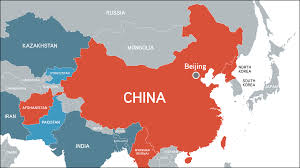
Beijing is executing its fifth consecutive critical minerals strategy. Washington signed its first. The gap between them is the most consequential geopolitical challenge the SPA faces — and the strongest argument for why it must succeed.
This Is Not a Fair Fight. Not Yet.
Let’s be honest about what we are looking at. China’s 15th Five-Year Plan, adopted March 5, 2026, is not a new policy. It is the latest chapter of a fifteen-year mineral security doctrine that Beijing has been executing with state capital, sovereign patience, and surgical precision while the rest of the world debated supply chain theory at conferences.
The 15th Plan’s ambitions, that includes artificial intelligence, new energy vehicles, quantum computing, advanced materials and clean energy dominance, are built on a mineral foundation. Cobalt. Lithium. Copper. Tantalum. Rare earths. The DRC holds approximately 74% of global cobalt supply, the world’s largest undeveloped hard-rock lithium deposit, roughly 80% of global tantalum reserves, and the second-largest copper deposits on earth. For China’s technological supremacy to be real, the DRC’s mineral output must remain inside Chinese supply chains. That is not an assumption in the plan. It is a non-negotiable prerequisite.
And right now, that prerequisite is met. Chinese state enterprises control approximately 80% of DRC cobalt output.
China refines 73–80% of cobalt globally, 59% of lithium and up to 91% of rare earths. The DRC sends ore. China sends back batteries, electric vehicles, semiconductors, and dominance.
That supply chain, from Lualaba to Shenzhen, is the 15th Plan’s physical backbone. It did not happen by accident. It was built systematically, over fifteen years, while no Western government had a coherent counter-strategy.
The Grip Is Real. But It Is Starting to Crack.
Here is what the 15th Plan’s authors did not model: a Kinshasa that has finally learned its own leverage.
Sicomines is the emblem of everything that went wrong. The flagship 2008 minerals-for-infrastructure deal gave Chinese state enterprises — CREC, SinoHydro, Huayou Cobalt — 68% of one of the most strategically important mining joint ventures on earth, against Gécamines’ 32%. Roads were promised. Hospitals were promised.
Transparent revenue flows were promised. Fifteen years later, the DRC government has commissioned a full forensic audit — Mayer Brown, EY, and Rothschild & Co — covering the entire 2008–2024 period. That is not a routine compliance exercise. That is a sovereign state demanding to know how much it was robbed.
The cobalt export restrictions tell the same story with different numbers. In February 2025, the DRC halted all cobalt exports at nine-year price lows and imposed annual quotas — roughly 96,600 metric tons for 2026 and 2027, less than half of 2024’s output. The measure was explicitly aimed at Chinese operators overproducing to suppress prices and entrench market control.
CMOC responded by increasing output regardless. But the signal was sent: Kinshasa is no longer passive. It is asserting sovereignty over the minerals that the 15th Plan cannot afford to lose.
These cracks matter enormously. They are the openings the SPA was designed to walk through.
The SPA Is the Answer. It Must Be Treated Like One.
The US-DRC Strategic Partnership Agreement, signed December 4, 2025, is the most serious Western attempt in a generation to contest Chinese dominance in a critical mineral jurisdiction. It grants US investors the right of first offer on Strategic Asset Reserve assets. It provides security guarantees. It ties DRC governance reform to American economic support. It even permits US firms to take minority stakes in existing Chinese-DRC joint ventures — a provision written specifically to enter and dilute Beijing’s positions from within.
This is not a diplomatic courtesy.
This is a direct challenge to the 15th Plan’s supply chain logic, formalized in treaty language.
But the SPA is only as powerful as the capital and urgency behind it. And right now, both are under pressure. Three months after signing, not one American company has locked in mining rights. The SPA’s financing architecture depended (indirectly) on Gulf sovereign wealth funds — PIF, Mubadala, ADQ — anchoring US private equity vehicles for DRC deployment. The Iran war froze that pipeline before a single check cleared. ADQ’s $1.2 billion minerals vehicle with Orion Resource Partners, explicitly mandated for DRC, is halted. Meanwhile, China’s Zijin Mining begins lithium production at Manono — the largest undeveloped lithium deposit on earth — in June 2026, with or without American intervention.
The DRC parliament votes on SPA ratification on March 16. Kinshasa’s coalition is not watching for speeches. It is watching for wire transfers. For evidence that the most important strategic agreement the DRC has ever signed with the United States actually comes with American capital behind it.
China’s 15th Plan runs through 2030. It is executing now — at Manono, at Sicomines, in the refining facilities that transform Congolese ore into the batteries and chips of tomorrow. Every month without US capital committed to specific DRC assets is a month in which the 15th Plan’s supply chain logic becomes harder to contest. The SPA is not a long-term project. It is an emergency response to a fifteen-year head start.
The Stakes Are Too High to Move Slowly
This is the moment that will be studied for decades. The DRC holds the minerals that will determine who leads the clean energy transition, the AI revolution, and the defense technology competition of the next thirty years. China understood this in 2008 and has been acting on that understanding every year since. The 15th Plan is not a threat on the horizon. It is a strategy in execution, today, in the same provinces, on the same assets, that the SPA was designed to secure.
Kinshasa is not waiting for Washington to get ready. It is using the SPA, the UAE CEPA, the French Inga III MOU, and the Sicomines audit simultaneously — as instruments of a state that seems to have finally understood what it holds and what it is worth. That is not a problem for the SPA.
That is the SPA working exactly as it should: creating competitive pressure that forces better terms for the DRC and real investment from American partners.
The 15th Plan makes the SPA more urgent, not less viable. Every crack in China’s grip — the Sicomines audit, the cobalt quotas, the Manono legal dispute — is an opening that American capital and political will can walk through. The framework exists. The legal foundation is being ratified. The assets are identified. What remains is the hardest and most important thing: the decision to move, with conviction, before the window closes.