
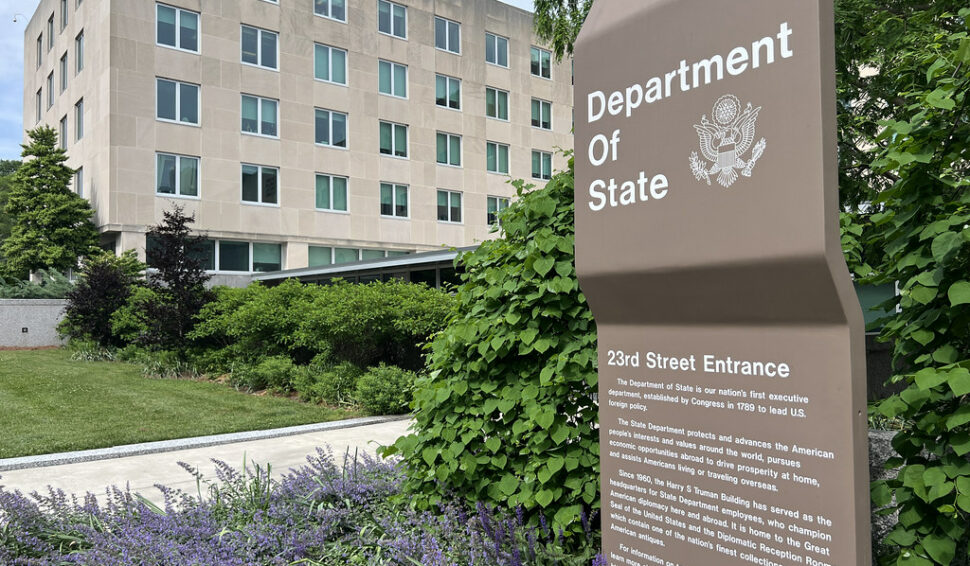
Washington has put $500 million behind African critical minerals. The program names one corridor by name, and it starts in the Congo.
The Bureau of African Affairs opened its U.S.-Africa Strategic Investment Program on 23 July.
Ten awards, $5 million to $50 million each, twelve to thirty-six months, funded from FY 2026 money that must be obligated by 30 September 2027. Two focus areas: Critical Minerals Investment, and Commercial Diplomacy Acceleration. The first submission window closes on 21 August.
Among the performance indicators the program will measure itself against is one that names a single piece of infrastructure: the volume of critical minerals transiting on the Lobito Corridor. In a continental program covering forty-nine countries, one corridor is written into the scorecard. Its Congolese feedstock is copper and cobalt from Katanga, and a substantial share of that output sits with operators from the country this program was designed to compete against (MEDIUM confidence, AS assessment).
That is the whole problem in one line.
The Program Is Buying the Thing Congo Has Not Yet Delivered
Read the priority challenges rather than the press release. Under critical minerals, the program funds work on policy, regulatory and institutional barriers, transparent and predictable investment frameworks, improved procurement and licensing, and institutional competence. Under commercial diplomacy, it funds regulatory reform, customs modernization, trade facilitation, and energy reliability. It also names, in plain language, market distortions and competitive disadvantages that American companies face against state-backed competitors.
Every one of those is a Congolese file with an open date on it.
The United States and DRC Strategic Partnership was signed on 4 December 2025. Ratification bills went to Parliament on 7 March 2026, the National Assembly adopted them in April, the Senate in May, and promulgation was still pending as of mid-July (HIGH confidence).
Article XII of the agreement carries an explicit twelve-month obligation to amend the 2014 law governing the fiscal, customs and parafiscal regime applicable to collaboration agreements, plus further legislative alignment. The reform clock and the funding clock now run in parallel, and neither waits for the other.
The Two Focus Areas Are One Problem in Kinshasa
Applicants will treat these as separate tracks. In the DRC, they are not.
No American minerals project de-risks in Katanga because a geological map improved. It de-risks when the customs process at the border becomes predictable, when power reaches the plant, when a licence survives a change of provincial leadership, and when a procurement round can be won without a relationship. Those are commercial diplomacy problems, and they determine whether a critical minerals concept produces a bankable asset or a memorandum.
The reverse holds too. A trade facilitation project in the DRC that ignores who controls the mineral flow through the corridor is optimizing a pipe without asking what runs through it.
The advantage that state-backed competitors hold in the Congo does not sit in the orebody. It sits in that gap between the two focus areas: in the speed of a decision, the durability of a licence, the financing of the road to the plant. A program that funds both halves has the right instruments. Whether applicants connect them is a different question (MEDIUM confidence).
The Real Constraint Is the Calendar, Not the Money
The money must be obligated by 30 September 2027 and projects must start no later than 1 October 2027. Concepts submitted in the first window get results on 29 November. That is fast for a grant cycle and slow for a reform cycle.
Congolese institutional change does not move on a fourteen-month clock, and any concept that assumes it will is buying a delivery risk it has not priced. The applicants who do well here will be those who scope against what the Congolese state can actually execute within the window, not against what the reform agenda says it intends to do. Distinguishing between those two things is the entire exercise.
The Verdict
For four years, Washington’s problem in the Congo was that it had no instruments. It now has a treaty, a corridor, six financing vehicles and half a billion dollars in enabling-environment money with a hard obligation date. The instruments are no longer the constraint.
Kinshasa has not promulgated the treaty that the whole architecture assumes.
Washington. Paris. Kinshasa.