
- Michael
- Updates
He cries at night. He prays in the morning. And somewhere between the two, he is building what could become the first Congolese-owned integrated copper-cobalt refinery in the history of Lualaba province.
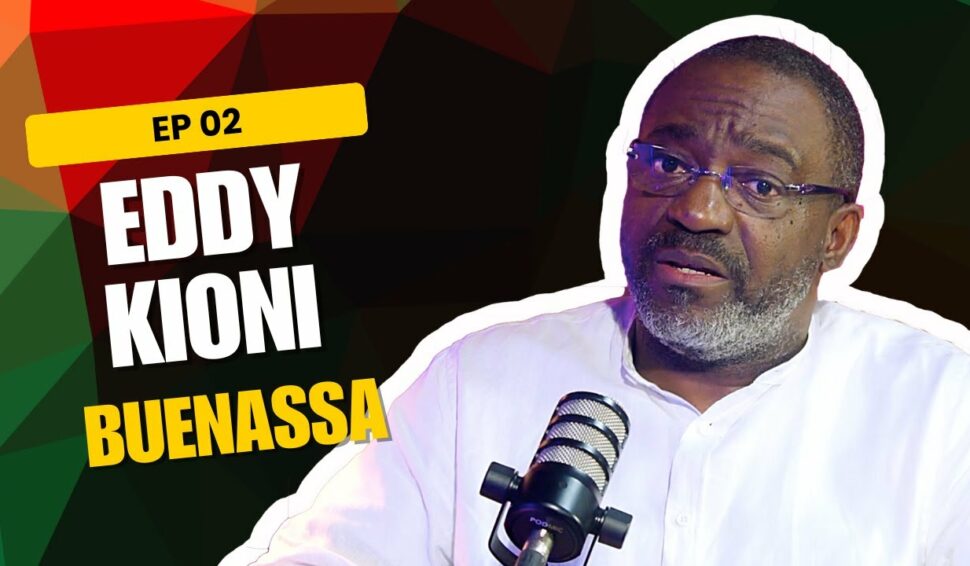
Eddy Kioni is not the kind of entrepreneur that Davos panels invite. Not yet. But spend fifty minutes listening to him on Innogence Consulting‘s Beyond The Mine podcast and you begin to understand that what is being assembled in the shadow of Katanga exceeds what American due diligence reports are equipped to capture.
A Career Nobody Scripted
Kioni studied political science in Germany and Belgium, started in ICT advisory in Europe, then did what few qualified diaspora professionals do. He went back. In 2007, he returned to Kinshasa — “I had the opportunity and the honor,” he says, without irony — and entered public service. Advisor to the Ministry of Agriculture, where he led an economic and technical commission. Chief of staff at the Ministry of Hydrocarbons. Board member at SNEL, the national electricity company whose failures now constrain every mining operation in the copper belt.
Then came the private sector. An advisory firm that helped Huawei and Ivanhoe Mines navigate the DRC. Years running the RVA, the country’s airports and air transport authority. A palm oil venture with a Canadian-British group, redeploying old Unilever assets, which became the first 100% DRC-led operation in a non-mining sector to raise capital on Toronto’s junior stock exchange.
Government, parastatals, private sector, agriculture, telecoms, mining, transport. Kioni completed the full circuit of the Congolese ecosystem before attempting the move that would define everything after it.
From South Africa, he launched an effort to formalize artisanal copper-cobalt mining. He partnered with multinationals. Invested millions. Spent two years trying to make it work. It failed. He doesn’t dress it up.
But the failure taught him something. The problem wasn’t the miners. It was the absence of the industrial infrastructure to absorb their output and transform it into something the global market could price, trace, and trust.
Buenassa — Building the Missing Link
That question became Buenassa, an integrated refinery in Lualaba designed to produce 99.99% purity copper cathodes and cobalt sulphate. Phase 1 targets 30,000 tonnes of copper and 5,000 tonnes of cobalt annually, with a 4x scaling pathway. Estimated Phase 1 cost sits between $600 and $700 million.
The technical partners are serious. MET63 out of South Africa, Bara Consulting from the UK, DMT Group from Germany. Buenassa has partnered with Entreprise Générale du Cobalt, which holds rights to all hand-dug cobalt in the DRC, meaning the refinery would process both artisanal and industrial ore. Blockchain traceability is planned. A training centre for Congolese engineers is part of the blueprint.
The governance structure deserves attention. The DRC government holds a 10% golden share with veto rights on strategic decisions — employment, taxes, local content, environment — while state representatives sit on the board. Oversight without operational control. The kind of structure investors should actually want to see.
The American Alignment
This is where Buenassa stops being a mining story and becomes a geopolitical one.
Kioni is not building this refinery to sell to whoever bids highest. In a market where 74% of DRC cobalt exports flow to China and 80% of global refining capacity sits in Chinese facilities, Buenassa’s output is targeted to the United States.
Delphos International, a Washington-based firm that works directly with the US government on development finance, is structuring the deal. Delphos’ chair called the project “very much aligned with the geopolitical goals of the United States.” Buenassa is in discussions with a US-based commodity trader to market the production. The entire architecture is designed to feed American supply chains, inside the framework of the US-DRC Strategic Partnership Agreement signed in December 2025.
That is not an accident. That is a bet. A bet that the SPA is real, that American buyers will show up, and that a Congolese-owned company can compete on quality and compliance in a market China has dominated for a decade.
What Washington Doesn’t Know
When American investors discuss the DRC, the vocabulary is predictable. Risk. Corruption. Instability. Governance failure. Real concerns, all of them. But the conversation almost never includes people like Eddy Kioni — a man who served in three ministries, ran a national transport authority, lost millions on a failed venture, and emerged building exactly the kind of US-aligned industrial capacity that every Western critical minerals strategy paper says the DRC needs.
He is not asking for charity. He is building a refinery that produces 99.99% copper for American supply chains, with government golden shares, blockchain traceability, and a training centre for Congolese engineers.
And he cries at night. Because the financing gap is real. Because the DRC’s institutional environment punishes ambition as reliably as it rewards connections. Because building a $700 million refinery in Lualaba with no guaranteed DFC commitment requires a kind of faith that due diligence models cannot quantify.
“I just got a call to do it. Every day, step by step, I keep walking.”
This is a story of an Entrepreneur. The kinds of entrepreneurs America loves. The problem is nobody on the DFC board, at the EXIM origination desk, on the Senate Foreign Relations Committee is listening to a fifty-minute podcast on a YouTube channel with 1,270 views.
Someone should fix that.
“Beyond The Mine” by Innogence Consulting — Episode 2 with Eddy Kioni, CEO of Buenassa.