
- Ascendance Team
- SPA Intelligence Briefs
EXECUTIVE SUMMARY
Alert Level: HIGH — DRC-China Sign Mining MOU in Beijing (Duty-Free to China May 1); Gertler Stalls $9B Orion-Glencore; FARDC Enters Lubero; UPDF Withdraws April 3; Turkish Drone Base Kisangani; Copper Freight Train Crash (3 Dead); CAMI Forfeits 16 Titles; Kolwezi T17 Radiological Emergency (100K Residents, KCC Officials Summoned); Powering Africa Summit Closes; 13th Gouverneurs Conference (74% Kolwezi Execution); James Swan Appointed MONUSCO Head; DRC Attends Own UNSC File; African Energy Revised DRC Power Map; April 1 in Four Days
The week’s defining development is not the Lubero withdrawal or the Gertler stall. It is the MOU Watum signed in Beijing this week — duty-free DRC mineral exports to China effective May 1, a MIFOR priority project designation, and a September joint ministerial forum — while SPA ratification bills sit in parliament and OFAC’s April 1 deadline is five days away. DRC is running dual-track diplomacy as a deliberate strategy. Five additional signals: a copper freight train carrying copper crashed, killing three; KCC officials were summoned over the Kolwezi radiological emergency affecting 100,000 residents; FARDC entered Lubero; James Swan became the first US diplomat to head MONUSCO; and DRC is sitting at the UNSC on its own file for the first time.
Washington Framework: Foreign Assistance as Strategic Capital
The interpretive framework for the entire SPA architecture is explicit in the Trump administration’s State Department FY2026-2030 Strategic Plan: “US foreign assistance is not charity — rather it is strategic capital to be wisely invested to advance US interests — and we expect all of our allies and recipient nations to take seriously American strategic and commercial priorities.”
This is not rhetorical framing. It is the operating logic of every SPA mechanism — the SAR right-of-first-offer, DFC capital, EXIM financing, the March 16 military cooperation waiver, and the OFAC pressure architecture with hard April 1 and April 15 deadlines. The SPA is not a development agreement. It is a strategic investment instrument with built-in conditionality.
Read against that doctrine, Watum’s Beijing MOU today is DRC exercising the leverage Washington anticipated. DRC is signaling that it is managing multiple strategic priorities simultaneously. The April 1 and April 15 deadlines will be the first test of where Washington draws the compliance line.
1. DRC-China Mining MOU Signed in Beijing — Duty-Free Exports from May 1
On March 26 in Beijing, Minister Watum Kabamba and Chinese Minister of Natural Resources Guan Zhi’ou signed a Memorandum of Agreement on cooperation in geology and mineral resources. Rooted in the 2023 Tshisekedi-Xi summit strategic orientations.
Operative provisions: structured cooperation on permanent consultation, respect for the Congolese legal framework, investment protection, and promotion of local resource transformation. The Mines de Fer de la Grande Orientale (MIFOR) is designated as a priority structural project, with Chinese Chamber of Commerce mobilization and large-scale industrial valorization units. Watum was invited to the September 2026 International Mining Ministers Forum for a joint intervention with his Chinese counterpart.
The tariff provision: From May 1, 2026 — 35 days from today — DRC exports to China will benefit from duty-free customs access. This is a direct, concrete economic incentive that the SPA does not currently match. The US framework offers preferential investment access and SAR mechanisms. China is offering a zero-duty tariff channel for 35 days.
The strategic signal: Signed two days after the Minmetals meeting, the day after Bandundu, and six days before OFAC’s April 1 deadline. This is deliberate dual-track diplomacy operationalized as a signed instrument. Watum at Mining Indaba: “The rivalry between China and the United States does not interest us.” Investors who model the SPA as an exclusive-access framework must revise that assumption now.
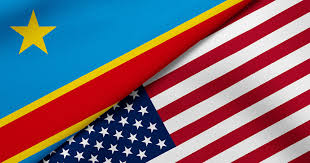
SPA vs. China MOU: SPA offers SAR right-of-first-offer, DFC/EXIM capital, security cooperation, Lobito logistics, and Grand Inga energy commitment. The China MOU offers duty-free export access from May 1, MIFOR priority project designation, geological cooperation, and industrial valorization at scale. DRC will use both. Price the leverage accordingly — this changes the negotiating baseline for every SPA deal term currently under discussion.
2. The Gertler Problem: $9B Deal Stalled; KCC Has a Second Cloud
Orion CMC’s proposed acquisition of 40% of Glencore’s Mutanda Mining and KCC — approximately $9 billion, backed by DFC and ADQ — is stalled by Dan Gertler’s OFAC-sanctioned royalty streams over both assets. Resolution requires a Gertler settlement, an OFAC-specific license, or a deal structure that routes around his interests. None are fast.
KCC now carries a second governance cloud: KCC officials were summoned in connection with the Kolwezi T17 radiological emergency (see Section 9). The SPA’s flagship transaction asset is simultaneously subject to a legacy sanctions obstacle and a nuclear authority governance inquiry in the same week. Model a 6-12 month delay on close. China, at approximately 72% of DRC copper and cobalt, has not paused.
3. Watum in Beijing: China Minmetals Meeting (March 24)
Two days before signing the MOU, Watum held a strategic working session with China Minmetals Corporation — parent of MMG Kinsevere Mine in Haut-Katanga — in the presence of DRC Ambassador Francois Balumuene. Discussions focused on extending Minmetals’ DRC operations; the group expressed interest in acquiring new permits and establishing technical collaboration with the national geological service (SEGEAC). In 72 hours: Minmetals meeting, then a bilateral minerals MOU covering MIFOR, duty-free exports, and a September joint ministerial forum. This is a sequenced Chinese engagement strategy.
4. Copper Freight Train Crash — Three Dead (March 25)
Bloomberg reported that three people died in the crash of a DRC freight train carrying copper on March 25. Full route and operator details are not available at publication. DRC’s rail network — primarily the SNCC corridor connecting Kolwezi to the Angolan border and onward to Lobito — is aging, poorly maintained, and subject to recurring fatal incidents.
A fatal copper freight crash on the DRC rail network in the same week as Ivanhoe’s first Kamoa-Kakula Lobito shipment captures the corridor’s contradictions in full. If confirmed on the SNCC Kolwezi segment, it is a direct reliability signal for the SPA’s flagship logistics infrastructure. The corridor needs consistent, safe throughput before it can claim a genuine role in reshaping DRC copper logistics.
5. Powering Africa Summit: US Energy-Minerals Architecture (March 19-20)
The 11th Powering Africa Summit convened in Washington DC on March 19-20 under the theme “Powering the US-Africa Partnership: Energy Infrastructure, Critical Minerals and Investment Strategies.” US Energy Secretary Chris Wright participated alongside EXIM Chairman Jovanovic and State Dept Bureau of African Affairs Senior Official Nicholas Checker. The summit closed the day before the March 17-18 DRC-Rwanda talks — part of the same coordinated Washington architecture. DRC’s energy deficit is now a Washington-level priority item alongside the SAR mechanism.
6. 13e Conférence des Gouverneurs: 74% Implementation; April Remaniement Signal
March 24-28, Bandundu-ville. All 26 governors, PM Suminwa, and Tshisekedi. Special Council of Ministers, March 27. Theme: agricultural transformation.
The reported 74% execution rate on the Kolwezi 2025 conference recommendations is materially different from zero implementation. 26% non-execution in a governance-dependent SPA execution environment remains a risk indicator, but the baseline is more solid than previously assessed. Notable side event: Minister Patrick Muyaya gave a university lecture specifically on the Washington Accords and the SPA — the first active government communication effort to build domestic understanding of the agreement at the provincial level.
Rumors of an April government reshuffle are circulating. Performance at Bandundu and delivery on SPA priorities are reportedly influencing ministerial appointment calculus. A reshuffle would create transition risk for key SPA-linked portfolios: Energy, Mines, Infrastructure, and Finance.
7. FARDC Enters Lubero; UPDF Withdraws April 3; FDLR Breach Risk
FARDC and Wazalendo entered Lubero following M23 and RDF withdrawal on March 23-24 — the first verified territorial shift since the March 17-18 Washington joint statement. UPDF withdraws from Lubero by April 3 (Operation Shujaa repositioning; may shift to Mahagi/Ituri). ACLED records 60+ FARDC drone strikes since January.
UN expert-backed reporting alleges active FDLR integration into FARDC units — uniforms, weapons, logistics — directly contradicting DRC’s Washington Accords commitment. If substantiated, this constitutes a material breach. Washington pressed Kinshasa on this explicitly in the March 17-18 talks.
GL 1 expires April 1 — four days. Washington set April 15 as the military plan assessment deadline across six operational zones. Credible RDF withdrawal progress by April 15 enables a GL 1 extension. Tactical repositioning without substantive withdrawal activates full blocking and Q2 escalation.
8. UN Security Council; James Swan Appointed MONUSCO Head; DRC as UNSC Member
The Security Council convened on Thursday for an open briefing on the DRC. US Senior Advisor Massad Boulos chaired. Rwanda was present under Rule 37.
Acting MONUSCO head Vivian van de Perre briefed.
Two structural firsts: James Swan — a US diplomat — has been newly appointed as SRSG and Head of MONUSCO, replacing Bintou Keita. A US national running MONUSCO simultaneously with Boulos chairing the UNSC DRC session is an unprecedented concentration of US institutional presence on the DRC file. And DRC is now a newly elected non-permanent UNSC member for 2026-2027 — attending its own security council as a Council member for the first time in its history.
Council members voiced alarm about intensified drone use and foreign mercenary involvement — Blackwater reported to be active in DRC supporting FARDC operations. China and Russia resisted the phased MONUSCO deployment. Turkish investor Turhan Mildon has been contracted to build a FARDC drone launch base in Kisangani — a direct consequence of the March 16 military restrictions waiver activating SPA Article III security cooperation.
9. SAR Pipeline, CAMI Forfeitures, Manono, and Kolwezi Radiological Emergency
First closed transaction: Virtus-Chemaf (~$750M including debt assumption, March 13). Rubaya (~15% global tantalum, M23-controlled): restart contingent on security situation. Manono lithium (Zijin/Cominière, June 2026 production target): AVZ ICSID arbitration unresolved — litigation overhang on all offtake.
On March 19, CAMI DG Popol Mabolia Yenga signed a déchéance list forfeiting 16 mining titles for non-payment of surface fees. Key names: AVZ Minerals Congo, ZHI PENG Mining, Sycamore Investments (x2), Pilar DRC Mining (x2), Kisengo Mining. Cross-reference against all counterparty portfolios before any new DRC commitment.
Kolwezi T17 radiological emergency — declared March 23, now active. Declared by Minister Sombo Ayanne Safi Mukuna Marie-Thérèse (acting nuclear authority). Cause: uncontrolled artisanal mining at a remblai site exposed radioactive substances — almost certainly uranium-bearing from historic cobalt-copper processing. Over 100,000 residents are potentially affected. DW and international media coverage confirm the story has crossed the global threshold. KCC officials were summoned — creating a direct corporate governance link to the SPA’s flagship $9 billion transaction asset. Any operator adjacent to T17 or sourcing from the Kolwezi ASM network carries potential radiological contamination in their supply chain: a material SEC, FCPA, and supply chain due diligence disclosure risk.
Due diligence — three non-negotiables: (1) Verify SNEL power capacity independently at the specific project site. (2) Cross-reference the March 19 CAMI déchéance list against all counterparty portfolios. (3) Assess radiological exposure from Kolwezi T17 for any operator sourcing from the Kolwezi ASM network.
10. Energy: Inga 3, Kamoa Solar, Lobito First Export, Revised Power Map
African Energy published a revised DRC power infrastructure map in March 2026 — the most current comprehensive view of the sector, covering operating, under-construction, and planned facilities, transmission lines from 132kV to 500kV+, and cross-border interconnectors to Angola, Republic of Congo, Tanzania, and Zambia.
DRC and South Africa resume Inga 3 talks in April 2026. Energy Minister Ramokgopa visits Kinshasa. Negotiations target increasing the Eskom PPA from 2,500 MW to 5,000 MW. World Bank $1 billion ten-year program is active — first $250M tranche approved June 2025. SPA Article X creates a joint Inga governance committee, activating on ratification. Also active: Pioka-Tombe (6,450 MW), reactivated by the Council of Ministers on January 9 with Electroconsult — not yet in any current IEA or DFI pipeline analysis.
Mining power: AFC 1,000 MW DRC Green Giant solar (SkyPower Global) in development. 233 MW solar PV at Kamoa-Kakula (Sungrow/CrossBoundary) nearing commercial operation. Ivanhoe shipped the first low-carbon Kamoa-Kakula copper anodes through the Lobito Atlantic Railway to Aurubis AG in Germany. One shipment milestone and one fatal freight crash in the same week.
11. Financing and Compliance
The IMF approved $442 million in January 2026. DFC, Rawbank/IFC $265M, World Bank Inga 3 disbursements, and EXIM Bank (confirmed at Powering Africa Summit 2026) form the multilateral financing architecture. The DRC-China duty-free MOU adds a parallel Chinese tariff channel effective May 1. The frameworks are not mutually exclusive — DRC will use both.
Compliance: WWF/Themis documents $1 billion in DRC mineral tax losses via Rwanda smuggling in 2023 — no major financial institution had flagged Rwanda as high-risk before March 2 OFAC designations. With April 1 five days away and the RDF designated as a blocked institution, that gap is a live dual OFAC/AML liability.
Lobito ESG: 874,000 hectares of miombo woodland lost in the Katanga Copperbelt between 2000 and 2024, with Tenke Fungurume Mining the largest single contributor. EU deforestation regulation will intensify scrutiny as corridor volumes scale.
Risk Assessment
Security — Eastern DRC / M23 (Lubero withdrawal noted): 8.5/10 — HIGH
FDLR-FARDC integration (Washington Accords breach risk): 7.0/10 — HIGH
Kolwezi T17 radiological (100K residents, KCC summoned): HIGH — supply chain/governance
OFAC / RDF — April 1 GL 1 expiry: CRITICAL — 5 days
April 15 assessment — GL 1 extension signal: HIGH — watch
DRC-China MOU — duty-free May 1, SPA leverage shift: ELEVATED — strategic signal
Orion-Glencore (Gertler + KCC radiological exposure): 6.0/10 — ELEVATED
Manono lithium — AVZ ICSID litigation cloud: 6.0/10 — ELEVATED
April government remaniement — SPA portfolio risk: ELEVATED — monitor
Provincial SPA execution (74% Kolwezi; Bandundu signal): ELEVATED — execution risk
Constitutional Court SPA challenge: ELEVATED — no timeline
Lobito corridor reliability (copper train crash March 25): MEDIUM — infrastructure signal
SAR deal flow (44 assets; Virtus-Chemaf closed ~$750M): MEDIUM-HIGH — active
Energy / Inga 3 pillar: MEDIUM — positive trajectory
Southern SAR corridor / Lobito: 3.5/10 — MANAGEABLE
Overall SPA environment: 6.5/10 — ELEVATED
Take Action
For Mining Companies and Operators: April 1 is four days away — complete RDF counterparty screening now. Cross-reference the March 19 CAMI déchéance list (16 titles) against all counterparty portfolios. Assess Kolwezi T17 radiological exposure for any operator sourcing from the Kolwezi ASM network. Verify SNEL power capacity independently at any project site. Track the copper freight crash route and cause — if on the SNCC Kolwezi corridor, there are direct logistics risk implications.
For Investors: The DRC-China duty-free MOU (May 1) is the single most important new pricing variable for SPA investment modeling. DRC is not an exclusive partner — price the leverage accordingly. This changes the negotiating baseline for every SPA deal term currently under discussion. KCC now carries both a Gertler obstacle and a radiological governance inquiry — reassess the flagship transaction risk profile. Watch the April remaniement for SPA-linked ministerial continuity. Inga 3 April talks (5,000 MW PPA) is the energy positioning moment.
For Legal and Advisory: The DRC-China MOU creates a parallel investment protection framework — assess implications for SPA exclusivity provisions and any existing exclusivity representations to clients. Gertler royalty resolution is the legal bottleneck on the flagship transaction; KCC’s T17 radiological exposure adds a second governance cloud on the same asset. FDLR-FARDC allegations constitute a potential material Washington Accords breach. The April remaniement could affect ministerial counterparts on active mandates.
What to Watch
April 1 — OFAC GL 1 expiry. Full RDF blocking unless an extension is issued.
May 1 — DRC-China duty-free export access activates. Monitor implementation and impact on SPA mineral offtake structures.
April — Government reorganization (rumored). SPA-linked ministerial continuity: Energy, Mines, Infrastructure, Finance.
April 3 — UPDF withdrawal from Lubero. Verify execution.
April 15 — Washington assessment of M23/RDF military plan. Key GL 1 extension signal.
April 2026 — DRC-South Africa Inga 3 talks. Ramokgopa visits Kinshasa. PPA renegotiation (5,000 MW).
April 2026 — Lobito rail concession PPP tender.
June 2026 — Manono lithium production starts. Watch for AVZ enforcement action.
September 2026 — International Mining Ministers Forum. Watum’s joint appearance with the Chinese counterpart.
Ongoing — Kolwezi T17: perimeter security, contamination assessment, KCC governance response.
Ongoing — Copper freight crash: route confirmation, cause, SNCC corridor impact assessment.
Ongoing — Gertler royalty resolution and Orion-Glencore close timeline.
Ongoing — Sicomines audit. Monitor Actualite.cd “Qui perd, qui gagne?” Ep. 17+.
Ongoing — Constitutional Court SPA ruling.
Ongoing — FDLR-FARDC integration allegations. Watch for UN expert confirmation.
Thanks for reading!
Analysis compiled from: DRC Ministry of Mines (@MinMinesRDC, March 26, 2026); AfricaNews RDC (March 24-26, 2026); Critical Threats Project (Congo War Security Review, March 23-25, 2026); Security Council Report (What’s In Blue, March 26, 2026); Bloomberg (March 25, 2026); Ecofin Agency; RFI (March 20, 2026); ACLED; Powering Africa Summit (March 19-20, 2026); African Energy revised DRC power map (March 2026); WWF/Themis “Beneath the Surface” (March 2026); Ivanhoe Mines; DRC Nuclear Authority declaration (March 23, 2026); US Department of State FY2026-2030 Strategic Plan; Ascendance Strategies IntelNote — Conférence des Gouverneurs (March 25, 2026); Ascendance Strategies analysis; and discussions with DRC government officials and sources familiar with SAR processes.
Washington. Paris. Kinshasa.