
- Michael
- Governance & Reform
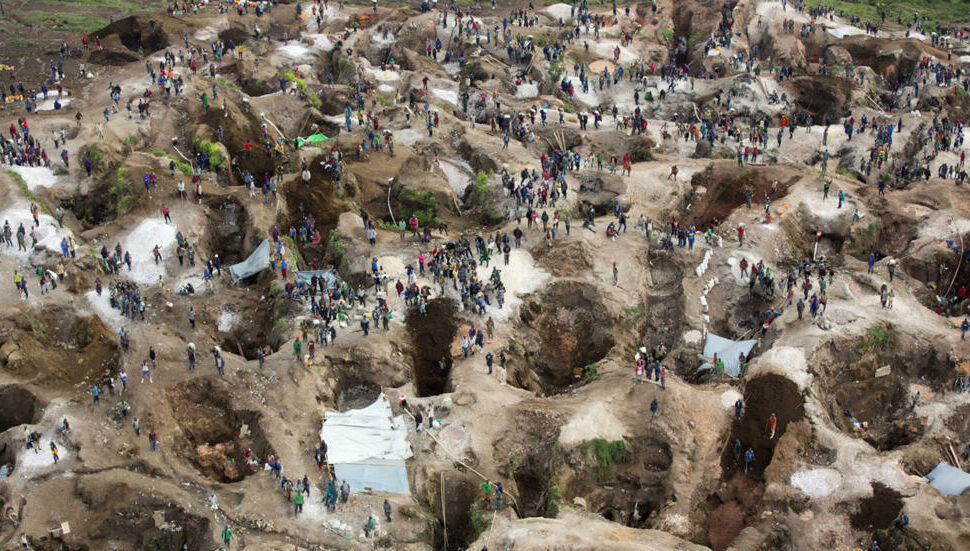
On January 29, 2026, heavy rains triggered a landslide at the Rubaya coltan mines in North Kivu, collapsing multiple tunnels and burying over 200 artisanal miners. The death toll—confirmed by M23 rebels—marks the deadliest single mining incident in the DRC since May 2013.
The tragedy crystallizes why Rubaya, despite supplying 15% of global tantalum and half of the DRC’s coltan output, was excluded from the Strategic Asset Reserve shortlist submitted to Washington in January 2026. This isn’t bureaucratic oversight. It’s the collision of geology, governance failure, and geopolitical calculation.
The Operational Reality: Zero Safety Standards
Former miner Clovis Mafare’s testimony to AP captures the structural fragility: “People dig everywhere, without control or safety measures. In a single pit, there can be as many as 500 miners, and because the tunnels run parallel, one collapse can affect many pits at once.” Tunnels extend 15 meters underground, hand-dug with shovels, lacking ventilation or structural support.
Workers operate 12-hour shifts for $2-5 daily.
The January 29 collapse occurred at Luwowo, within the Bibatama Mining Concession. Victims include creuseurs (diggers), children, and market women. M23-appointed authorities temporarily halted mining and ordered resident relocation—measures unlikely to endure given rebel financial incentives.
The M23 Economics: $800,000 Monthly Makes Safety Secondary
Since seizing Rubaya in April 2024, M23 generates at least $800,000 monthly through coltan taxes—$9.6 million annually. At $70/kg (up from $30 pre-M23 control), 120 tonnes monthly equals $8.4 million in gross mineral value. This revenue model incentivizes extraction velocity over worker protection. M23 invests nothing in safety infrastructure.
The Dodd-Frank Impossibility
The International Tin Supply Chain Initiative classified Rubaya “red zone” in February 2024, prohibiting member sourcing. Yet Rubaya coltan continues flowing to Apple, Samsung, Dell, and HP through Rwandan laundering networks. In 2023, Rwanda recorded 50% coltan export increases—not from domestic production growth, but smuggled Congolese minerals.
The U.S.-DRC Strategic Partnership Agreement requires SAR assets provide “reliable supply guarantees.” Rubaya cannot. Even if M23 control ended, the site’s title structure remains contested between SMB Sarl, SAKIMA (state mining company), and COOPERAMMA (artisanal cooperative). ITSCI classification persists until supply chain verification—requiring government control—becomes operational.
The Kinshasa Response: Outrage Without Jurisdiction
The Congolese government issued a January 31 communiqué expressing “solidarity with victims’ families” and noting Rubaya’s “rouge” (red) classification by Ministerial Decree. “All exploitation activities are prohibited,” the government declared.
The problem is that Kinshasa controls neither Rubaya’s terrain nor its supply chains. DRC security forces cannot access the site. Gécamines lacks operational presence in Masisi territory. The government’s jurisdiction is rhetorical, not functional.
The Strategic Calculus
When evaluating SAR candidates, U.S. policymakers apply three filters: Supply Security (can assets deliver reliably?), Due Diligence Compliance (can investors satisfy Dodd-Frank?), and Operational Viability (can the DRC implement safety standards?). Rubaya fails all three.
The 200+ deaths aren’t an accident—they’re the predictable outcome of artisanal mining in ungoverned space. The DRC’s 2018 Mining Code mandates safety inspections and environmental protections. None function in rebel territory.
This is why the Strategic Partnership Agreement doesn’t “reform” Congolese mining law—it bypasses it. SAR creates a parallel compliance structure working outside DRC institutional capacity. Washington excludes assets where institutional failure guarantees continued tragedy.
Until M23 control ends and government authority becomes operational—not just nominal—Rubaya remains what it has always been: a world-class deposit that kills the people who mine it, enriches the rebels who tax it, and stays permanently excluded from any partnership requiring the rule of law.
Ascendance Strategies provides specialized advisory on the US-DRC Strategic Partnership Agreement, including SAR opportunity assessment, eligibility analysis, JSC process navigation, and reform implementation tracking.
Contact: [email protected] | +33 7 51 53 43 77 | ascendance-strategies.com