Two Atlantic export architectures for Congolese minerals are being built in parallel. One is written into a treaty. The other is being poured in concrete on Congolese soil. Neither is a response to the other, which is what makes the comparison useful.
The corridor with the obligations
The Sakania-Lobito Corridor is American-financed and Angolan. The Development Finance Corporation’s 553 million dollar loan to the Lobito Atlantic Railway consortium, signed in Washington in December 2025 alongside a 200 million dollar loan from the Development Bank of Southern Africa, positions the corridor as arguably the most significant US infrastructure investment on the African continent in recent decades. Combined with pledges from the United States, the European Union, the African Development Bank, and the Africa Finance Corporation, total commitments to the corridor exceed 10 billion dollars. The DFC investment is projected to increase Lobito’s transportation capacity ten-fold, to 4.6 million metric tons per year, and to reduce the cost of transporting critical minerals by up to 30 per cent. A seven-party memorandum binds Zambia, the DRC, Angola, the European Union, the United States, the Africa Finance Corporation, and the African Development Bank. Road rehabilitation runs alongside the rail, financed separately.
What makes Sakania-Lobito different from other infrastructure announcements is that its usage is written into a treaty. Article IX of the US-DRC Strategic Partnership Agreement sets three volume commitments within five years, applied to DRC state and state-owned enterprise equity and contractual volumes: at least 50 per cent of copper, at least 90 per cent of zinc concentrate, at least 30 per cent of cobalt, routed via the corridor. Article VIII requires qualifying strategic projects to use it where geographically feasible. The Joint Steering Committee may modify the volume numbers based on commercial and logistical developments.
Those are the hardest numbers anywhere in the instrument. They are also the least discussed. And they apply to the state and state-owned volume perimeter, not to the total Congolese production. That distinction changes the compliance question for any operator whose DRC exposure runs through Gécamines equity or SOE contractual arrangements.
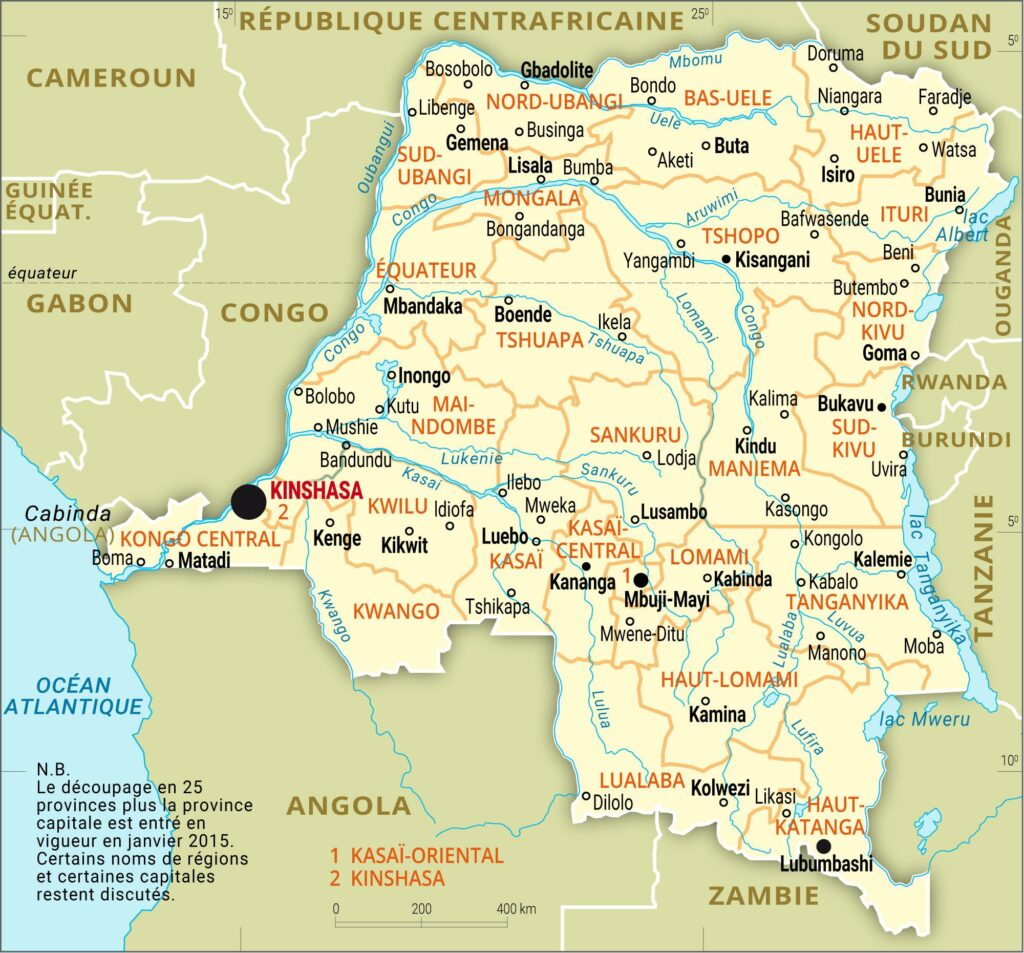
The geography reinforces the treaty. For the Copperbelt operator, Sakania-Lobito is not simply a policy preference. It is the shortest rail route from Kolwezi and the surrounding Lualaba concessions to a deep-water Atlantic port. The current Congolese export pathway via Dar es Salaam requires longer inland transit through Zambia and Tanzania. The Matadi route requires trans-shipment down the Congo River. Sakania-Lobito is the only direct rail link between the Copperbelt and an Atlantic ocean-going terminal. This geographic advantage is what makes the treaty obligations physically enforceable at scale for copper and cobalt in the Southern Corridor.
The coastline with the capacity
The second architecture sits on Congolese territory. On 3 February 2026, AD Ports Group signed Heads of Terms with the DRC Ministry of Transport, Communications and Opening Up and with the National Transport Office (ONATRA SA) to explore the development and operation of a multipurpose terminal at Matadi, the country’s historic Atlantic gateway on the Congo River. The document was signed at the Presidential Court in Abu Dhabi by DRC Deputy Prime Minister and Minister of Transport Jean-Pierre Bemba Gombo and AD Ports Group CEO Captain Mohamed Juma Al Shamisi. Separately, DP World is developing the country’s first deep-water port at Banana. Both operators are Emirati.
This sits inside a much larger continental position. Financial Times reporting this month, drawing on fDi Markets, puts Emirati entities at more than 168 billion dollars in announced African projects since 2017, with DP World and Abu Dhabi Ports operating or developing ports, inland terminals, and free zones in around thirteen African countries.
The 168 billion dollar figure requires the same discipline applied to every other headline number in this sector. It measures announced projects, not deployed capital. Earlier windows from the same database gave roughly 97 billion dollars for 2022 and 2023. Announced pipelines are statements of intent.
Terminals under construction are something else, though the Matadi agreement itself is at Heads of Terms stage, meaning the parties have set a framework to explore development and operation. It is not a concession. The commercial and operational architecture remains to be negotiated.
Why the asymmetry matters more than the rivalry
The temptation is to frame this as competition between Washington and Abu Dhabi for Congolese cargo. That framing is premature and probably wrong. The two architectures serve different mineral routes, different final markets, and different regulatory environments.
One route carries obligations. The other carries capacity.
The Sakania-Lobito commitments are treaty obligations with dates attached, owed by the Congolese state on the perimeter of state and state-owned volumes, measurable against published figures. They can be tracked, and failure to meet them is legible. The JSC modification clause introduces flexibility but does not remove the accountability structure. A DRC state that consistently under-routes state-owned copper or cobalt away from Sakania-Lobito is a DRC state that is not delivering on Article IX. That signal is available to compliance officers, DFI risk committees, and downstream OEM procurement teams.
The Matadi and Banana pathway carries no equivalent structural obligation. The Emirati architecture serves whatever cargo the market and the operators direct through it. If it becomes the dominant physical route for cobalt hydroxide transiting via Kinshasa, for gold flowing through Dubai downstream, or for Congolese imports of Chinese equipment feeding the mining sector, the flows are not measurable against a treaty commitment. They will show up in port statistics after the fact.
The decision question: which one wins, and for what
For an operator or compliance counterparty pricing the two architectures, the useful frame is not which one wins overall, but which one wins for which cargo, on which timeline, under which regulatory regime.
For copper and cobalt from the Copperbelt, the Sakania-Lobito advantage is structural: direct rail, shortest inland distance to Atlantic tidewater, treaty obligations, US and EU financing backing, and JSC-level accountability. Operators with US-aligned final markets, DFC or EXIM financing, EU CSDDD due diligence obligations, or Article XV traceability requirements will find that the Sakania-Lobito compliance profile is materially easier to document than any alternative. This is the corridor for the SAR and QSP volumes the SPA architecture is designed to move.
For cargo whose final market is Dubai, for imports flowing into the DRC, for volumes that do not touch the DRC state or SOE perimeter, or for operators seeking neutrality vis-a-vis the US-China-EU triangulation, the Matadi and Banana pathways offer capacity without political conditionality. Cobalt hydroxide from Chinese-operated concessions that refines in China and prices in dollars via non-US intermediaries can transit either route without generating the same compliance signature.
The two architectures are not substitutes. They are complementary infrastructure for different regulatory regimes. The question for a serious counterparty is not “which port” but “which regulatory environment does my exposure sit in, and does my chosen route match that environment?”
The timing matters. The DFC funding is signed, the corridor rehabilitation is underway, the seven-party MOU is in force, and the treaty deadline runs to five years from SPA entry into force. The Matadi Heads of Terms are at the exploratory stage, with concession terms, construction timeline, and operational capacity all to be defined. The Banana deep-water development follows its own separate schedule. In the two-year window when the SPA volume commitments will be tested first, the Sakania-Lobito route will be operationally more mature than any Emirati Atlantic alternative on Congolese soil.
The bottom line
Two Atlantic export architectures for Congolese minerals are being built in parallel. They serve different regulatory purposes, land on different coastlines, and answer to different accountability structures. The Sakania-Lobito Corridor carries treaty obligations enforceable against the Congolese state and state-owned volumes. The Matadi and Banana pathway carries capacity that will serve whatever cargo the market and operators direct to it.
Counterparties with US-aligned final markets, DFI financing, or Article XV traceability requirements will find that their compliance work fits the Sakania-Lobito profile. Counterparties operating outside those regimes will find that the Emirati Atlantic pathway is being built for a different set of flows. Both are being built at the same time. Neither replaces the other. The strategic question is not competition. It is calibration of which architecture matches which exposure.
Tracking items
- Signature of a full concession agreement between AD Ports and ONATRA SA beyond Heads of Terms stage.
- Publication of Q3 2026 port statistics for Lobito showing progression toward the ten-fold capacity target.
- First JSC meeting output on Article IX volume tracking.
- DFC or EXIM commitment on the road rehabilitation component parallel to the rail.
Washington. Paris. Kinshasa.