
- Ascendance Team
- Deep Analysis, Updates
On 8 June 2026, a new Chemaf organisational chart became visible across multiple primary sources. The reporting concerns a specific operational transition at one DRC copper-cobalt asset. The structural observation it enables is broader and, to our knowledge, not yet named in any existing analytical framework on DRC critical minerals.
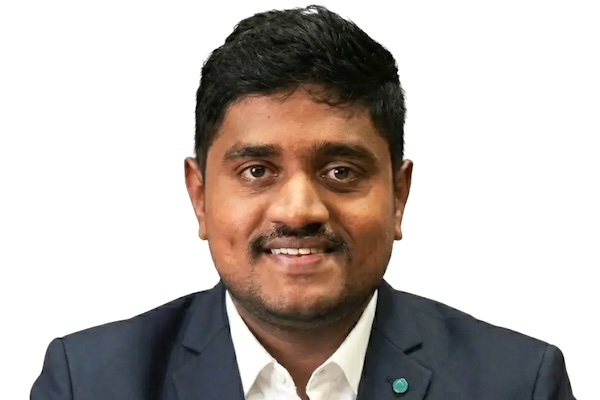
The Chemaf-specific reading is straightforward. The acquisition vehicle VLMH (Virtus Lloyds Minerals Holding) holds 100% of Chemaf assets, acquired for $30 million in March 2026. Ownership is Virtus 51%, Lloyds 41%, with a 10% cession to the DRC State announced. Phillip Braun, Virtus CEO, remains the formal CEO of Chemaf. Sooryanarayanan Prabhakaran, executive director of Lloyds & Thriveni Group, is now Managing Director Designate, explicitly tasked with operationalizing and ramping up the Chemaf orebody. Subramanian Alagappan, the group’s country head in DRC, serves as Deputy. The pattern is conventional for distressed-asset takeovers: the financial sponsor keeps the corporate title, the operational partner runs the mines.
The structural observation is the one that matters.
Five capital-structure models are now operating simultaneously in DRC critical minerals. Western publicly-traded majors (BHP, Glencore, Rio Tinto in adjacencies). Chinese state-owned enterprises (CMOC, Sinohydro, CREC, Zijin, Chengtun). UAE state-adjacent and Gulf capital (IRH, Falcon Resources, Luna Mining, the Tahnoun network). US-aligned private equity and institutional vehicles (Pax Silica, Critical Metals Corp, DFC-backed structures). And now, a fifth: Indian family conglomerate capital, structurally distinct from the four above.
Lloyds Metals and Energy is historically an iron ore producer. Thriveni Earthmovers is one of India’s largest mining services contractors. In 2025, Lloyds increased its stake in Thriveni to approximately 80%. The Prabhakaran family governs the integrated group. The leadership profiles are operationally credentialed in scaling industrial mining: Soorya Prabhakaran doubled iron ore production at Odisha from 20 to 40 million tonnes per year in two years. Alagappan has three decades of large open-pit project execution across India, Indonesia, China, and Mozambique. The same group separately operates Surya Mines SARL in Haut-Katanga, where a hydrometallurgical plant at Kitemina announces 30,000 tonnes per year of copper cathodes and 5,000 tonnes per year of cobalt hydroxide, with operations started in March 2026 and exploration on 16 concessions in the Likasi region.
The combined Lloyds DRC ambition is roughly 100,000 tonnes per year of copper and 20,000 tonnes per year of cobalt across Chemaf-Étoile, Chemaf-Mutoshi (when finalized), and Surya Mines. That places Lloyds in the top-five non-Chinese operators in the country if execution matches ambition.
Three implications follow.
First. The five-model framework requires updating. Most current critical minerals architectural analysis defaults to a US-versus-China binary, with allied frameworks (Baskaran’s recent CSIS analysis) extending to Australia, Canada, Japan, the EU, UK. None of these frameworks names an Indian family conglomerate capital as a structural actor in DRC. The capability gap is now visible.
Second. For SAR-aligned operators, the Chemaf transition matters concretely. The asset sits under quadruple institutional surveillance: presidential scrutiny, Carter Center audit conditions, IGF mining revenue deployment of 4 June, and ARSP subcontractor declaration extension of 1 June. The Indian leadership inherits this institutional posture from day one. How the Prabhakaran group navigates the regulatory architecture will set a precedent for how other Indian family conglomerate capital can enter the country.
Third. The risk profile is calibrated, not dismissed. Iron ore scaling does not translate directly to copper-cobalt hydrometallurgy. The Mutoshi project finalization is the inflection point of the thesis, alongside management of a $1 billion debt overhang and 3,000+ employees and subcontractors in arrears. These are execution challenges, not strategic ones.
The under-priced read: the West is debating registry architecture while a fifth model of capital is already entering the country. The architecture-closure challenge applies here, too.
Confidence on facts: HIGH (multi-source primary). Confidence on execution outcome: MEDIUM pending 12 to 18 months of operational ramp-up.
Washington. Paris. Kinshasa.